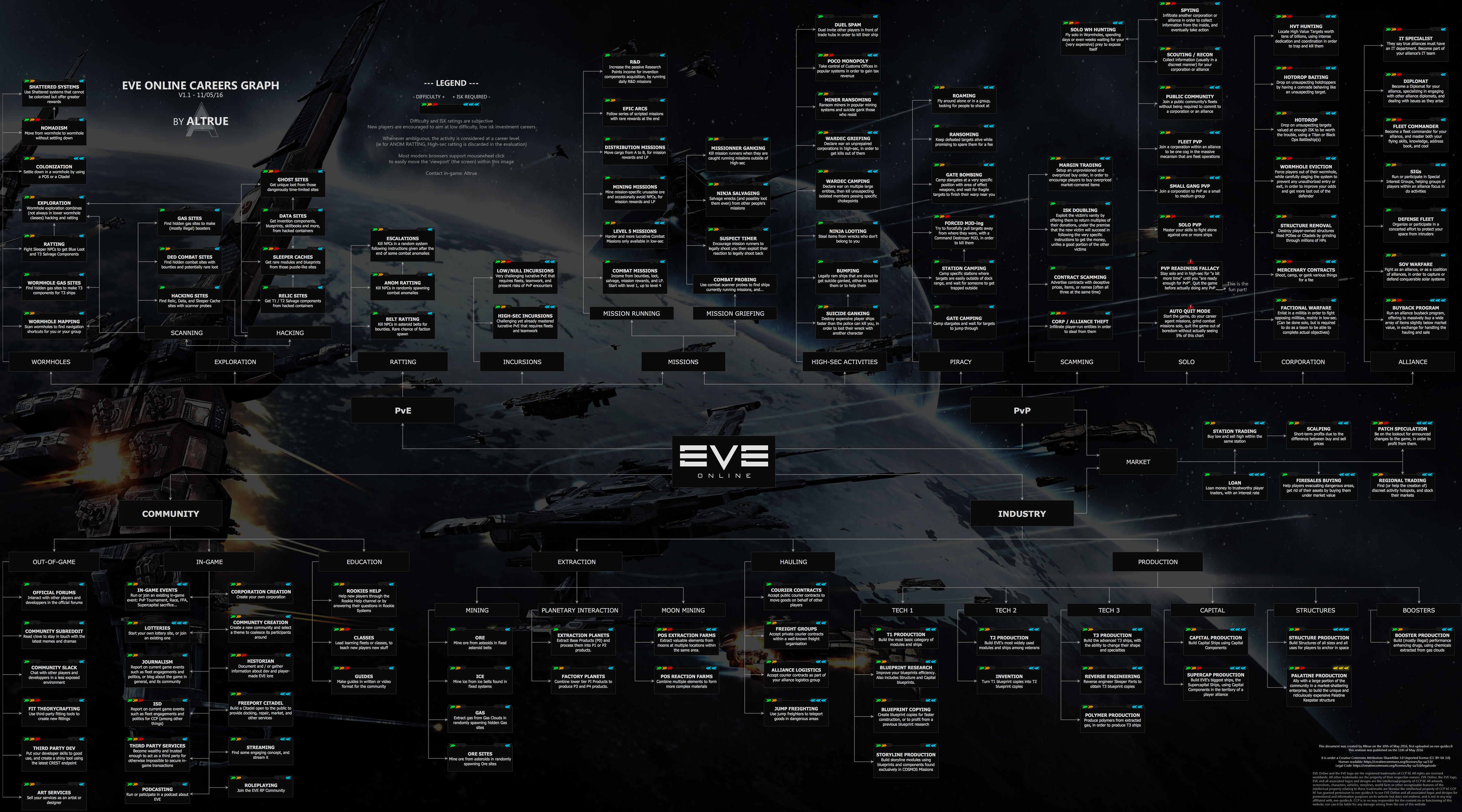
Economics and games don’t really seem to fit at first glance. Role-Playing-Games (RPG), Rogue-likes, Platformers, Adventure, Survival: the list goes on and on and most of these genres are irrelevant to the study of economics. However, one genre is incredibly relevant and provides us with a model of an economy inside the game. MMORPGS (Massively Multiplayer Online Role Playing Games), as the name suggests, brings together millions of players into one virtual world and allows them to interact with one another in game. This interaction may be in the forms of fighting, communicating, trading and etc (trading being the aspect that this blog is looking at). Since trading exists, an economy must exist too, but how accurate is this virtual economy in depicting a real life one? Could virtual economics possibly become a future case study that economists could look at?
Personally, I believe that virtual economies have the potential to change the way we think about economics and could become a unit of study. This is because of the freedom we get to experiment and implement ideas that would be practically impossible in real life and see the effects it has.
But enough with the hypothesising, lets break it down.
The minimum standards for a virtual economy to be considered as a case study.
Before we delve into whether virtual economies are practical examples that could be studied in economics, we first must define what should be the baseline for a virtual economy to be qualified as a case study.
Eve Online is a great example of what standards should be set. One standard should only really be met as we still want freedom to explore different types of economies.
Eve Online is described on their online website as:
“Fly spaceships, fight and explore together in EVE Online, the free space MMO game set in a vast online Sci-Fi sandbox.”
https://www.eveonline.com/
The one condition that a virtual economy must meet is that it should be “player-run”. Player run being that all steps in the creation of a good and service involves the player in some way.
For example, in Eve Online, the majority of items (90% +) are created from start to finish by players. Players mine the raw resources, players transfer those resources to other players, those players use those resources to craft the final product and players buy and sell these products on the market. The players are involved in each step along the way in the creation of a good or service. This might seem common sense at first but in MMORPGS some games introduce NPCS (non-playable characters) that can sell an infinite number of x good or service. This obviously is not an accurate representation of the real world and would disqualify it from being considered as a case study.
As long as this condition is met, we can explore the different effects certain things have on an economy when introduced. i.e. an economy that doesn’t have a government, an economy with the lack of a governing body, etc.
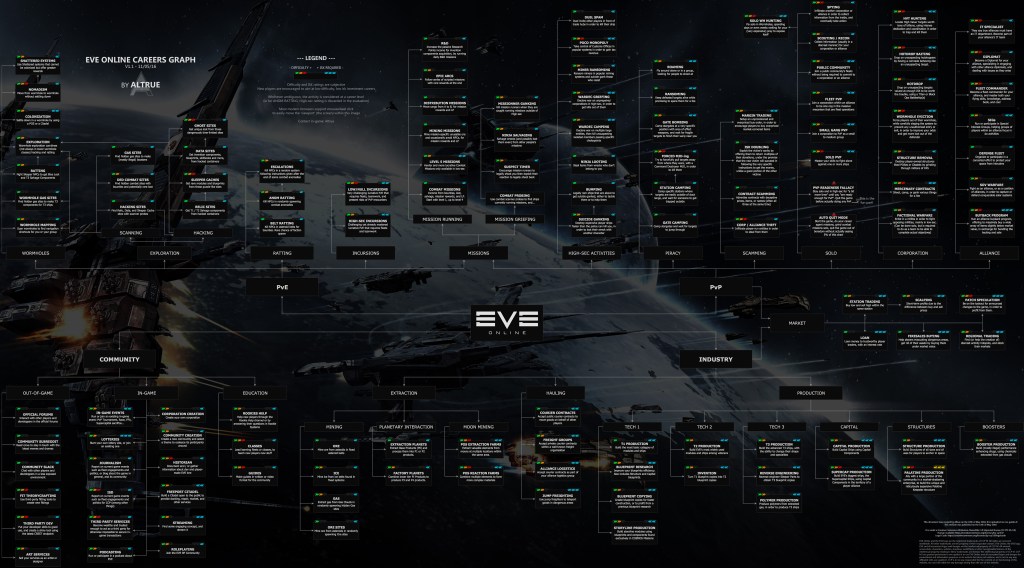
Eve Online though has another trait that helps simulate a real-world economy. The creation of player-based alliances. These alliances control sovereign territory and act as real life governments. They have player-run military, industrial sectors, laws, diplomacy and even a social security system. This gives a greater depth of realism to the game and allows us to explore even further into how economics play a part in their economy, such as the basic economic questions, consumer sovereignty and the PPC.
Economic concepts that are shown within Eve Online.
KEY TERMS:
The law of demand and supply is a theory that explains the interaction between the sellers of a resource and the buyers for that resource.
Inflation is a quantitative measure of the rate at which the average price level of a “basket” of selected goods and services in an economy increases over a period of time.
The PPC (Production Possibility Curve) is a tool used to highlight economic concepts. Concepts such as scarcity, opportunity cost and efficiency.
Technical Efficiency is where resources are allocated so they are producing the highest amount at the lowest cost.
Allocative Efficiency is where resources are allocated in a combination that is technically efficient while providing the maximum possible living standards for the population.
In Eve Online, there are two events that highlight some economic concepts: “mechanization” and “mega-projects”.
Mechanization
Mechanization, in Eve Online, is not the addition of automation in the form of robots in game but rather the use of third-party software to automate collecting currency through missions. Since these programs can run 24/7, large amounts of the in-game currency (ISK) gets injected into the economy every day, increasing the spending power of the consumer and therefore allowing them to purchase more goods and services.
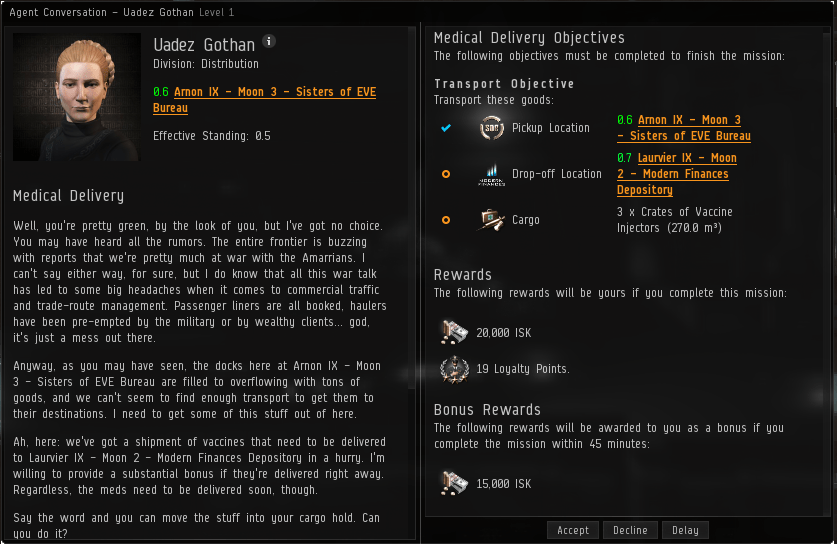
Since there is an increased demand due to an increase in spending power, this then increases the rate of inflation due to the law of Demand and Supply. Prices would increase due to demand increasing and supply staying the same, this then leads towards a higher equilibrium and therefore higher price. Since there is a consistent increase in prices over the course of a period of time, inflation increases as the “basket” of goods and services has increased in price.
This event highlights how demand, supply and inflation function within the virtual economy and how it functions as if it was in a real-life economy.
Mega-Projects
In Eve-Online, the Titan, the best spaceship in the game, cost 150 billion ISK in 2005 with its production time totalling around roughly a year. Currently it costs 50 billion ISK to produce in a much shorter time frame, with players being able to produce hundreds of these ships in a year. This is an example of the PPC (assuming that the Titan and, for arguments sake, a Stronghold, could only be produced) expanding due to an increase in efficiency.
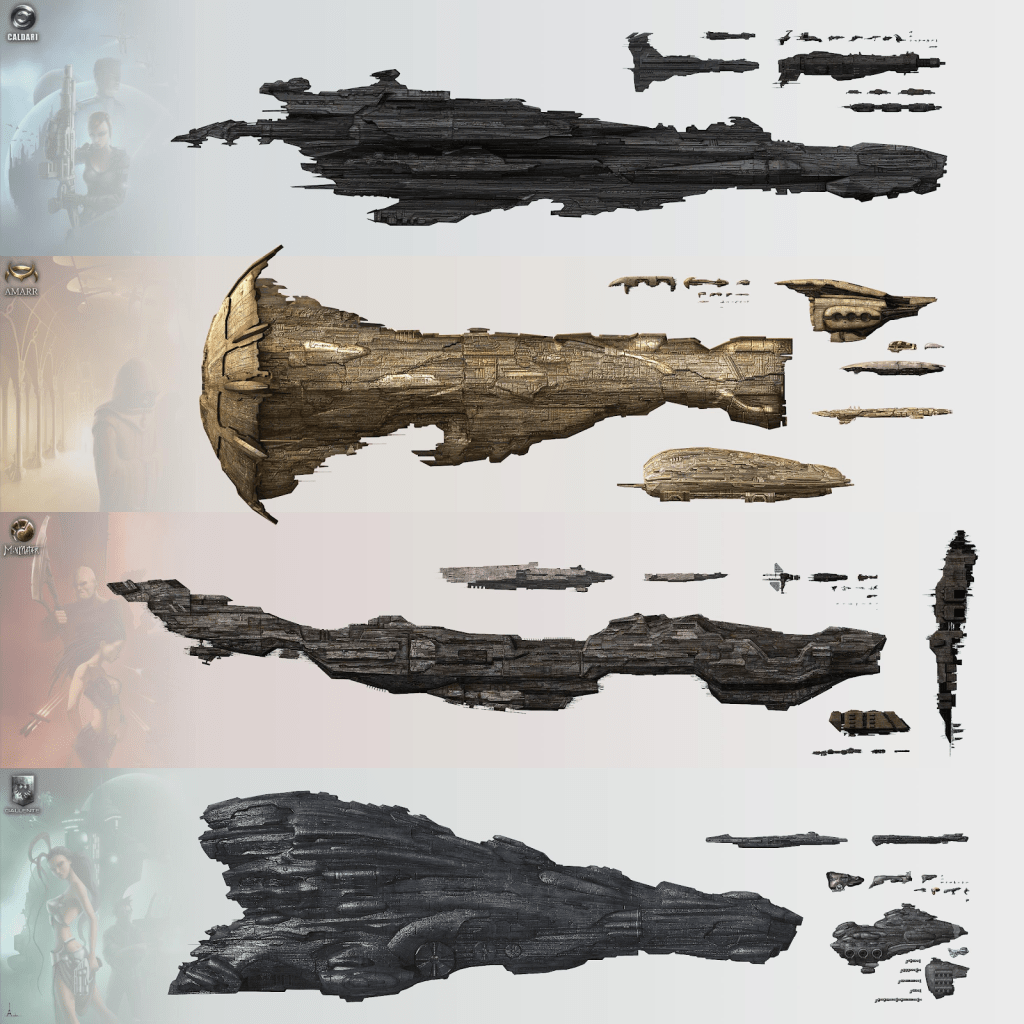
The introduction of more efficient methods for mining and producing (new structures and ships introduced into the game) allowed resources to be employed efficiently and in greater quantities which therefore lowered the production cost of the titan and the time taken to produce one. Since the production of one titan is no longer on the curve and that the alliances (government) continue to efficiently use their resources, this therefore shifts the point of production to a point somewhere on the curve where it is technically efficient (producing more than one Titan). However, this point may not be allocatively efficient, as, for example, the production of more strongholds that could protect players would have possibly maximised their welfare and safety compared to the production of the Titan.
This event highlights how the economic concepts of allocative efficiency, technical efficiency and the PPC apply in a virtual economy and how it functions as if it was a real-life economy.
Conclusion
From looking at the virtual economy of Eve Online and how it mimics a real-life economy (due to the examples mentioned above), this shows the practical uses of a virtual economy in the study of economics. Being able to study an economy that wouldn’t normally exist in real-life or/and an economy we would be able to manipulate, would provide information that we may have not been aware of beforehand. Therefore, this would have a positive impact on the stakeholders (economists) by expanding their knowledge, allowing more freedom to experiment with ideas and play around with possible theories that couldn’t be tested in real-life.
In the end, I stand strong with my idea that virtual economies will become a future unit of study for economists and am looking forward for the day when it is introduced.
Bibliography
The Economy of EVE Online: https://www.youtube.com/watch?v=nrW6p5ns8K8
The Economy of EVE Online – Part 2 – The Robot Problem: https://www.youtube.com/watch?v=dQRzr2zU2Xw
The Economy of EVE Online – Part 3 – Mega Projects: https://www.youtube.com/watch?v=YUNYQl0hlyk
Law of Supply and Demand: https://www.investopedia.com/terms/l/law-of-supply-demand
Inflation: https://www.investopedia.com/terms/i/inflation.asp

 Year 11 MHS Economics 2020