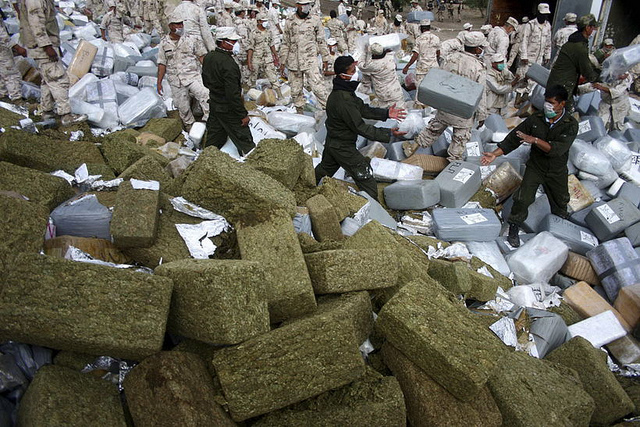
We now live in a day and age where economies all around the world can be measured and compared using a huge database of analytics. This, however, is not as accurate as it would seem. Black markets and illegal activities gather up huge revenues that have a major impact on economies that are never accounted for in official statistics. The most common black markets including; counterfeit, smuggling and trafficking. The World Customs Organisation’s 2017 Illicit Trade study estimated that the world’s economy doesn’t account for around 1.6 Trillion USD which is accumulated through black markets and illicit activities.
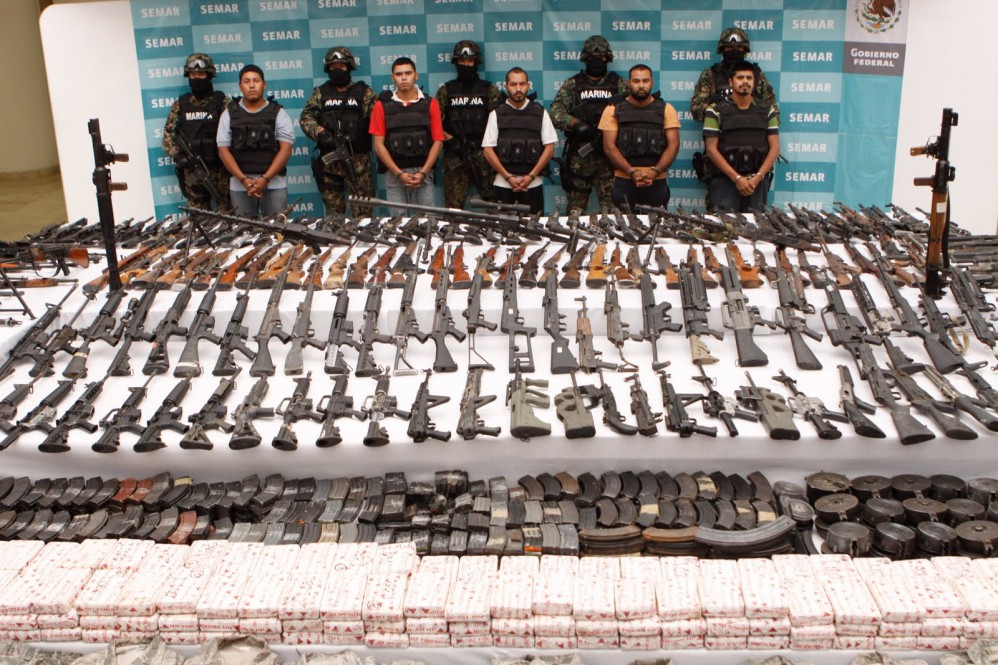
Mexico is notorious for having one of the largest black markets revolved around drugs. Drug cartels and drug trafficking play a huge role in Mexico’s economy as they can be seen to resemble huge legal corporations that are involved in markets worth billions of dollars while manufacturing, transporting and selling their products to customers. The Mexican GDP adds up to around 1.15 trillion USD (2017) with a per capita GDP of 8,902 USD (2017). Exporting is a major sector of Mexico’s economy making up around USD 373 Billion making it the 13th largest exporting industry in the world. These statistics however never really show the full truth as drug trade is most often disregarded in these economic statistics. This is because estimating the monetary value and profit generated from these drug cartels would be near impossible due to the lack of official documentation and reports, unlike all legal businesses.
The United Nations list “distorted resource allocation, price distortion in the real estate sector, distortion of exports, unfair competition, negative effects on foreign investments, corruption and further skewing of income and wealth distribution as the main harmful factors that drug cartels bring to an economy.” (United Nations Office on Drugs and Crime, 2017). This is evident when portions of profits gained from illicit activities are then used to fund and invest in corrupt businesses which can help cartels increase profit.
Violence causes Mexico’s economy to lose 249 billion USD annually according to the 2018 report from Mexican Peace Index. The acts of drug cartel violence and extortion practices have also been reported to impact around 60% of all local firms according to the Bank of Mexico. This impacts smaller businesses starting up due to their strategic location in poorer areas of Mexico with less security being used as lookouts and distribution factories.
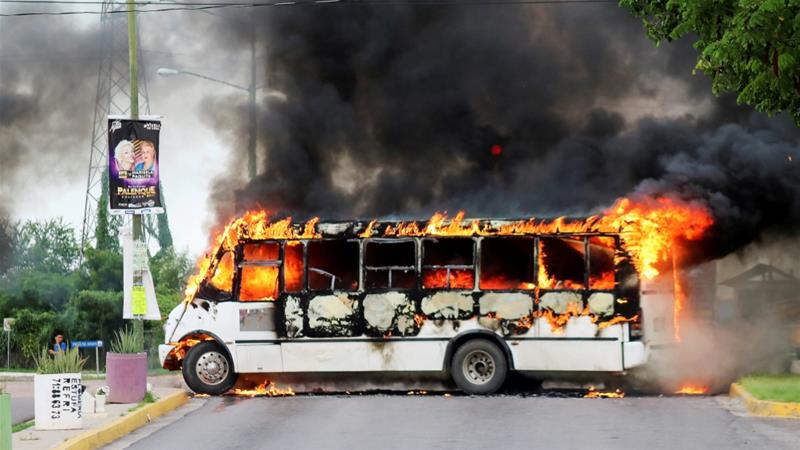
Violence is also seen to impact the tourism of areas of Mexico due to their bad reputation that scares tourists from travelling there which impacts the local economy several due to a reported 80% of their income coming from tourism. Tourists, however, are seen as ideal customers due to the amount of money carried on them while also reducing any legal risk as they do not have to export the drugs overseas. Violence does not only impact local businesses but is also seen to impact large corporations with the main one being an oil company that goes under the name PEMEX. They lose an estimated 1.6 Billion USD annually due to the theft of oil from their pipelines which impacts their quantity of resources while also creating high repair fees.
The violence that is created by drug cartels and illicit activities impacts the economy on a huge scale that can’t be translated into numbers. Huge corporations decide not to invest in Mexico due to safety concerns. Local businesses get shut down due to extortion practices. Overall, affecting Mexico’s economy, welfare, and services.
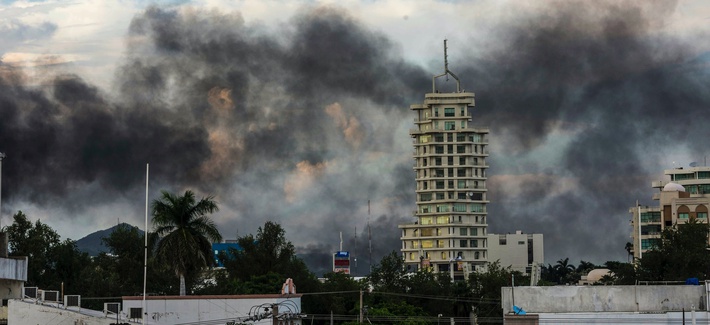
Drug cartels are valued for billions of dollars through several sources of income. This could have a positive or a negative impact on Mexico’s economy depends on how the profits are handled and what they are further invested in. Illicit profits can have a positive impact on the economy if it stays within Mexico and is invested in sectors that help local economies like real estate. The most common example of this was seen when the infamous drug lord Pablo Escobar built hundreds of homes for the poorest citizens in a town called Medellin. Overall, positive impacts are seen in Mexico’s economy when the profits stay within Mexico and are used to aid poorer communities in ways that replace the government. However, on the contrary, profits deposited in offshore banks have a negative impact on Mexico’s economy as they leave overseas untaxed making it unlikely to be invested inside Mexico.

If drug cartels were to suddenly disappear we would see a loss of an estimated 500,000 jobs resulting in an economic collapse. The billions of dollars generated that could partially be used to invest in legal sectors would disappear affecting poorer communities which are normally neglected by the government due to the bad reputation. However, we would see an increase in tourism which is a major sector of local economies. We would see an increase in interest from foreign companies to invest as the risk of security and the fear would have gone away. We would see a huge cost of 53 Billion USD vanish as corruption would heavily decrease due to the lack of illicit crime. Overall, while drug cartels do have somewhat of a positive impact on Mexico’s economy on a monetary scale proving the negative factors will always outweigh the positive.
resources:
- https://www.unodc.org/wdr2017/
- https://www.unodc.org/pdf/technical_series_1998-01-01_1.pdf
- https://www.havocscope.com/
- http://illicittradeindex.eiu.com/documents/EIU%20Global%20Illicit%20Trade%20Environment%20Index%202018%20-%20Overall%20Results%20White%20Paper%20June%206%20FINAL.pdf
- https://www.researchgate.net/publication/330468273_The_Economic_Impact_of_Drug_Trafficking_in_Mexico
- https://www.havocscope.com/tag/counterfeit-drugs/
- http://www.wcoomd.org/en/media/newsroom/2019/december/the-wco-issues-its-2018-illicit-trade-report.aspx

 Year 11 MHS Economics 2020
Interesting weigh up on how black markets benefit and contribute a substantial amount to an economy. Especially liked how you discussed the repercussions if the black market disappeared. How do you think the governments would deal with the economic repercussions of such a market disappearing?
LikeLike
How do you think, the black market in Australia compares?
LikeLike
Do you think the jobs lost in a black market collapse would be able to be replaced in other industries? Or would there be an overall increase in unemployment?
LikeLike
Good post.
LikeLike
(((o(*゚▽゚*)o))) i loved this blog it was really interesting reading about the mexico’s economic statistics, also el chapo is my hero
LikeLike
Good job Johan, very nice information about black markets around the world, I learnt a lot
LikeLike