The opening up of the global market has been the hallmark of international relations in the post-WW2 world. Global trade as a share of GDP increased from 39% to 61% from 1990 to 2008. The increase in trade brought with it a time of global prosperity and increased wealth worldwide, particularly in developed nations. Faith in financial institutions, in institutions in general, was at an all-time high.
However, the occurrence of the GFC changed the economic direction of the globe and resulted in increased protection as part of the recovery from the crash. These discriminatory measures have hampered the growth in international trade globally in recent years, with the ratio of percentage of increase in trade compared to GDP growth, the income elasticity of trade, has fallen from 2:1 pre-GFC to 1:1 from 2011.
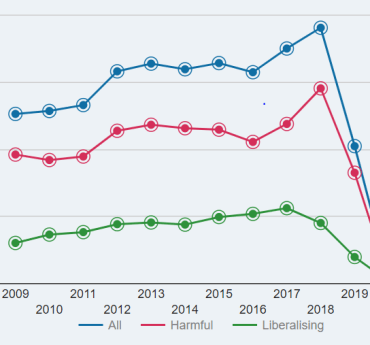
The decrease in global trade is a result of a combination of factors. Analysis by the ECB and IMF has suggested that the geographical shifts of aggregate demand (the total demand for goods and services in a market) worldwide from developed nations, which are often more trade intensive, to developing nations, who are often more self-sufficient, has resulted in decreased trade. Moreover, the changes in the composition of aggregate demand to services, which are less trade intensive, has also reduced trade volume worldwide. However, the primary reason for the reduction in trade is significant increases in global protectionism by all metrics. According to data from Global Trade Alert, there are significant increases in discriminatory trade measures post-GFC. Such measures now apply to 50% of imported goods in G20 countries, a significant increase from 20% of imports in 2009.
Such protection has changed the behaviour of businesses, with the same ECB and IMF analysis stating that goods are now being produced closer to final markets and countries such as China, who were long the assembler of foreign inputs, are now relying increasingly on domestic inputs for production. But what is protectionism and how is it increasing?
Protectionism describes the government policies that restrict international trade to help domestic industries. There are many vehicles in which a government can deploy protectionist measures. Since 2009, the most popular anti-trade measures have been import tariffs and anti-dumping, both of which put a tax on imported goods under specific circumstances.

Why protectionism?
Protectionism has grown to have an inherent allure in the post-GFC economic landscape, particularly in the global middle class. Particularly in developed nations, blue collar workers have been facing the consequences of increased globalisation for years as their jobs have been relocated to cheaper labour markets. For example, manufacturing in the Midwestern states of the United States, such as Indiana, Ohio and Michigan have slowly been leaving the country to Mexico. The outsourcing was facilitated by the North American Free Trade Alliance (NAFTA), which virtually removed all tariffs on imports from Mexico and Canada to facilitate free trade between the countries.
The electoral power of the anger of voters stuck without a job due to globalisation was felt in the 2016 US election, in which historically Democratic ‘Rust Belt’ states rallied around a protectionist trade ideology proposed by the Republican candidate, Donald Trump. While Trump has largely left his middle-class agenda at the door on issues such as tax cuts, he has certainly fought for them on the issue of international trade.
France experienced a similar political surge of protectionism in the rise of candidates Emmanuel Macron and Marine Le Pen in their most recent national election. Le Pen went to the people with a highly protectionist agenda that effectively involved closing the borders of France, which was certainly quite receptive with the French people and resulted in Le Pen making an unlikely bid into the final round of voting in the election. Macron, on the other hand, while initially being perceived as a more centrist candidate, has championed protectionism both domestically and in the European bloc in order to supposedly protect burgeoning industries within France. The fact that the two most popular presidential candidates have both championed protectionism to an extent is telling to the electoral power of protectionism in a world struck by rapid globalisation and resulting job loss in blue collar sectors.
The Consequences of Protectionism

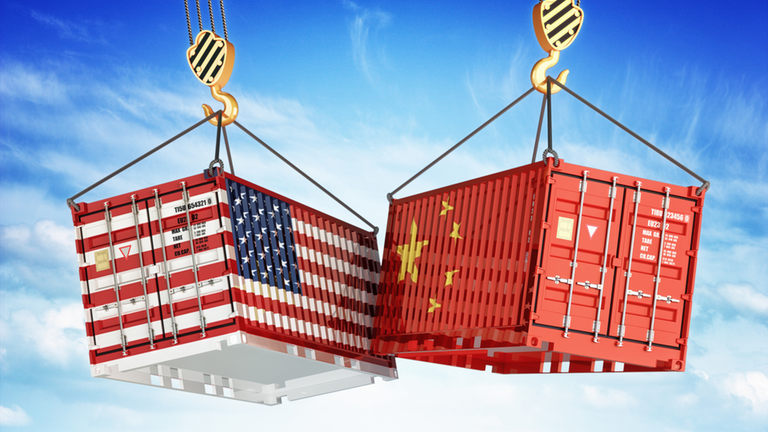
Trump’s tariffs on China has given economists a live test case on the effects of protection on both a nation’s and the global economy. The US Government is claiming that the tariffs are working, with China finally coming to the negotiating table on their widely recognised predatory trade practices. However, the economic implications of the tariffs have been shown to have been passed on to US businesses, therefore the US consumers. The National Bureau of Economic Research in the United States has estimated that 100% of the tariffs have been passed on to US consumers. Moreover, they have also found that the domestic prices of goods have been increased anywhere between 10 and 30% as a result of trade war. In raw terms, the NBER study estimates that US consumers lost $68.8 billion USD, while produces gained 21.1 billion USD from the trade policies. The aggregate loss to the US economy was $7.8 billion USD.
Now, Trump has argued China is having it just as bad, but the evidence, as often occurs, does not support his claim. Against the rhetoric of the White House, Chinese subsidies to business have not drastically increased as a result of the trade war, as shown in the recent data provided by the Export-Import Bank. The data suggests that even though Chinese subsidies are nearly four times greater than those in the US, medium and long-term export credits remained relatively unchanged from 2017 to 2018, highlighting that the initial tariffs failed to have the impact that the US Administration claimed that they did. Most importantly, while the import prices of Chinese goods did fall by 1.4% (which continues a trend of falling import prices to the US), retaliatory tariffs by China reduced the price of US exports by 4%, which resulted in reduced purchasing power of US goods.
Ultimately, it is evident that the trade war has resulted in significant damages to primarily the United States. Tariffs have been clearly been passed on to consumers, while producers are losing access to the Chinese market, which has resulted in a fall in the value of US exports. The evidence clearly states that the protectionist trade policies instigated by the United States has resulted in a net loss to both the US consumers and US citizens.
There are fundamental economic reasons that trade protectionism results in a lose-lose situation for all parties. First and foremost, specific nations are better at producing specific goods. Each nation’s technical efficiency varies based on their access to specific resources, the educational level of their citizens and the cost of labour within that nation. For example, it is simply inefficient to assemble cars in the United States, as it results in paying more to labour who merely oversee automated processes. Therefore, assembly in a country with cheaper labour results in more efficient production. Moreover, specific countries have better production infrastructure for specific goods and services. Advanced production is often more efficient in developed countries such as Japan or the United States, as the education level of the citizens and available infrastructure is better than in developing nations. Therefore, protecting local business who produce goods inefficiently compared to global competitors results in higher prices for consumers, therefore less consumption and lower economic growth.
Future of Global Protectionism
While the European Union has for decades been employing highly protectionist trade policies to primarily protect the agricultural sector, they are now expanding their protectionist measures in response to the use of tariffs by the US and China. The EU are expanding their tariff powers and also increasing the ability for the bloc to counter dumping. The EU are gearing up for the possibility of tariffs on European vehicles, after which they would be prepared to retaliate with their new powers. While the EU has always been strict on the dumping of excess agricultural produce in the bloc by developing nations in Africa, stricter anti-dumping regulations would result in a highly protected environment for agriculture within the EU.
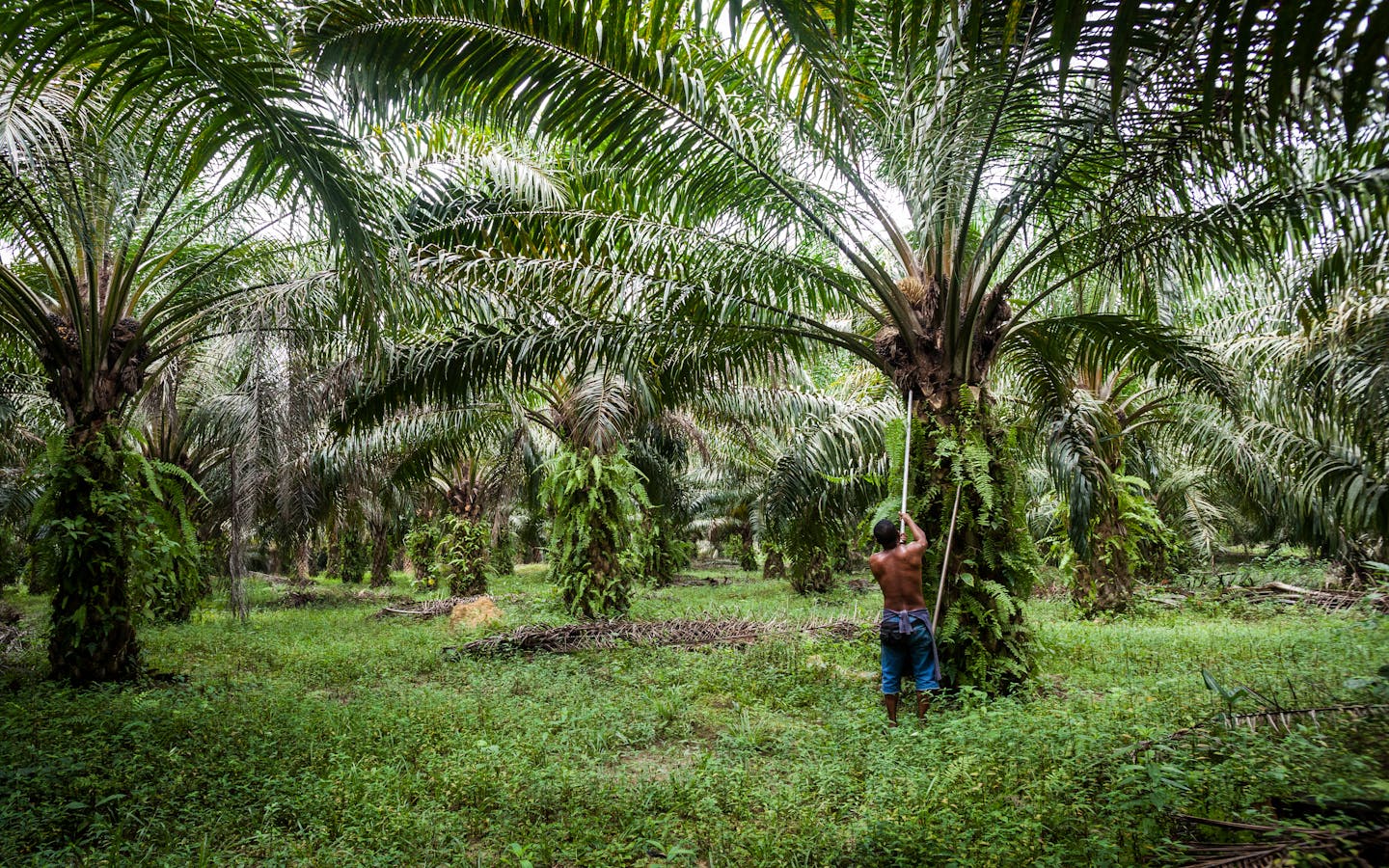
An example of EU protectionism is their new announcement that palm oil is no longer considered a biofuel, but considered unsustainable. Whatever one’s opinions on palm oil, it has protected EU energy production from imports from both Indonesia and Malaysia. As a result, Indonesia and Malaysia have both threatened trade retaliation. While the EU claims that palm oil are resulting is serious deforestation, the EU has taken no action on large scale tree destroyers such as soybean, which the EU has not taken any action against. The more likely motivation for the EU was the lobbies supporting EU based products such as sunflower or rapeseed oil, which are more environmentally destructive in their production than even palm oil. To protect local industries, the EU mischaracterised palm oil imports to make it harder to sell within the EU, therefore advantaging European oil producers.
Conclusion
Throughout history, the opening up of global trade has been cyclical, with eras of protectionism such as the 1930s and 40s or eras of free trade such as the 90s or 2000s. However, the increasingly nationalistic rhetoric has created a climate where protectionism is now politically viable even during eras of economic growth, which is unprecedented considering in the past, in which the world has turned to protectionism after financial crises.
While protectionism has clearly shown to have negative effects on the economy, as seen in the case study of the United States-China trade war, there are still political incentives for world leaders to enact a protectionist agenda. Ultimately, whether protectionist policies continue worldwide is yet to be seen, but there are certainly signs of increasingly protectionist policies in regions such as the European bloc.
Sources

 Year 11 MHS Economics 2020
Very good analysis of the situation regarding protectionism and how the trade war between China and the USA demonstrates this. Shows strong evidence supporting the claims made in this article.
LikeLike
Well researched and informative blog on a key idea in today’s political landscape.
LikeLike