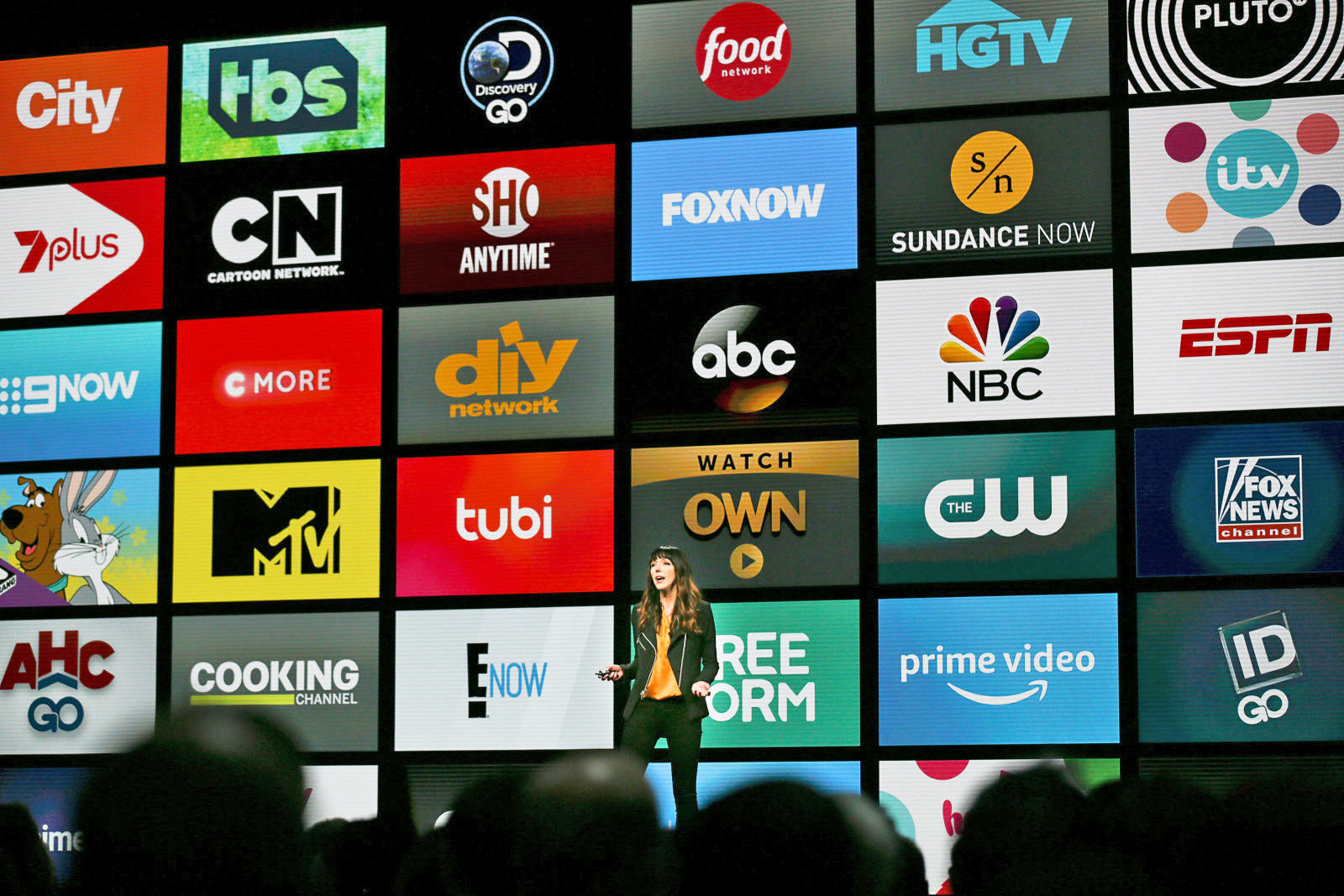

After the eventual success of services such as Netflix or Spotify, many other copycats have arisen, desperate to profit of this new model. But how successful is this new model? Could we be seeing the end of entertainment as individual goods?
The defining change of the streaming services is the introduction of the subscription model. This model signifies the departure from buying individual goods to a singular service. Where these models excel are their convenience. With one click you have ownership of every popular movie or every popular song right on your device. Why pay $20 for a item which you might use for 5 years when for $20 you could have access to everything for the duration of your subscription.
In 2014 the amount of profit made by Netlfix subscriptions overtook the profit from CDs. In 2018 the amount of revenue gained from Spotify overtook that of both physical and digital music downloads combined. So is the physical goods model of media dead? Profit from CD and DVD sales have been consistently on the decline since 2000 and 2008 respectively (in the US.) This can mostly be blamed upon the introduction of online shopping, and the ability to purchase media as a string of code rather than a physical good.
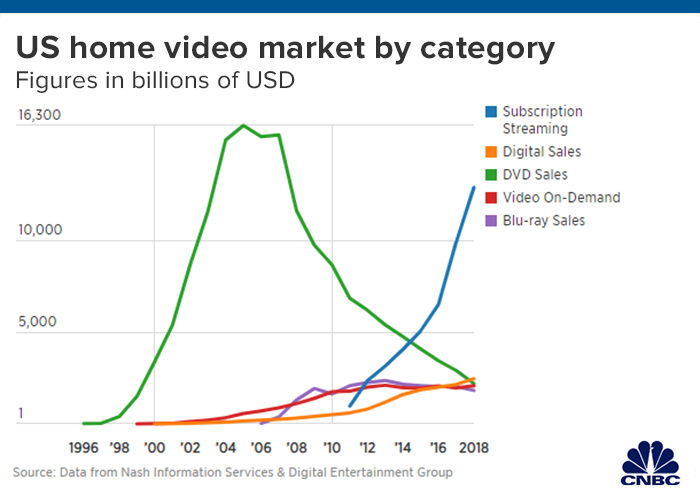
So what has streaming’s effect been on the economy? Physical goods were already on the decline by the release of streaming services however, they’d eventually reach an equilibrium. Streaming acts as a competitor to CDs and DVDs, with both offering the same product. A purchase towards streaming removes the necessity for a purchase towards physical goods. With streaming offering more of the same product for lesser of the price, sales towards CDs and DVDs began to decline more.
Streaming has affected the economy in numerous ways. By contributing to the decline in CDs and DVDs ,streaming has removed numerous jobs within retail and manufacturing. With less demand for these products jobs are dropped and people are forced to find new jobs. In the meantime Netflix has only 8,600 full time employees and Spotify only 4,165 employees in 2018. These services also put less money into circulation, due to their ability to offer lower prices.
However, it is these lower prices and increase to accessibility that has renewed interest in purchasing media. Streaming services are on their way to overtaking the total revenue from DVDs at their peak. Despite putting less money into circulation per individual purchase, Netflix and other streaming services are putting in more money because they cost less. By costing less money and offering more, more people are likely to make a purchase. On top of that, many video streaming services have begun to make their own original content while not cutting back on taking in other content. This is creating more jobs in of itself and while not creating as many that it has lost, could see a lot more jobs being created in the future as streaming services get even more popular.
Overall, streaming services are getting more and more popular with no sign of decline. While this increase signifies the departure away from physical goods, and thus the money and jobs associated with them, streaming services do offer a lot on their own. Many streaming services are striving to make original content of their own, creating many jobs, and streaming services are putting a lot more money in circulation than their physical counterparts ever could. While it is too early to weigh up whether streaming services have had a positive or negative impact on the economy it is possible to form one’s own opinion. With the information provided I believe that streaming has created a renewed interest in the market of music and movies/tv that with its current trend of growth, will eventually prove to be a benefit to the economy.
Will Creasey ECO04

 Year 11 MHS Economics 2020
I’m surprised that Netflixs only surpassed CD’s in 2014! Also, did you find any information on the number of jobs that have been lost in traditional industries since then?
LikeLike
A very astute analysis of the latest bubble in economics. Perhaps a comment as to how much streaming services pay vs standard mediums.
LikeLike