
We’ve all heard it. Of how the decreasing Australian dollar will affect the economy and how it is potentially disastrous to us as a society and individuals. The fluctuation of the AUD can influence prices of goods overseas and within our borders. This change of prices of goods and services affects the decisions of companies both domestic and abroad as they aim to maximise profit. This in turn, affects the consumers. Us. As consumers, we bear the brunt of the decisions made by these companies, and are forced to cope, regardless of good or bad. But what causes this fluctuation of the AUD?
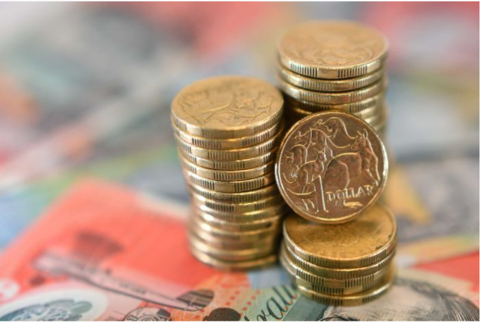
Firstly, being the differing interest rate in different countries. The RBA (Reserve Bank of Australia) has recently dropped the interest rate and justified it on the increasing unemployment rate as the cause. The difference in interest rates is known as the ‘differential benefit,’ meaning that they can get more value for investing in the assets of another country over Australia’s. For example, the current interest rate of China is 4.07%, while the interest rate of Australia is 0.75%. This means that by investing in China, they are receiving 3.32% more in comparison to Australia. This means that investors sell their AUD for other currencies so they can invest in more profitable economies.
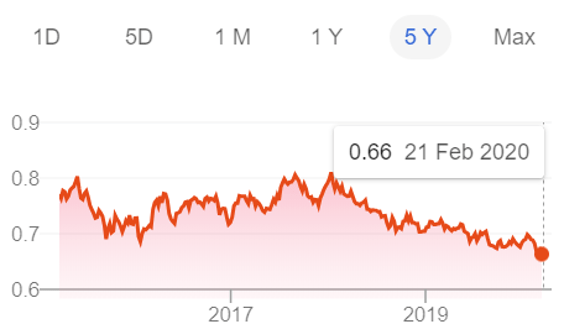
The second factor, being commodity prices is dependent on demand for a good or service. Australia decides what to produce based on its consumers. For the exports, the consumers are businesses overseas. The main example being iron. The Chinese’s wavering demand for iron can be both a strength and weakness to our economy. A high demand, means we have the so called ‘advantage’, however, a low advantage means we are at a ‘disadvantage.’ Due to the circumstances of the Chinese economy in our current time, the demand for iron is low, meaning that we have been impacted severely, thus affecting our economy further.

The third factor is speculation. Speculation on the stability of the global financial markets. Known as a commodity market, the Australian economy is highly dependent on the global market, and a change there can impact us as a result. So when there is enthusiasm and a good prediction for the global market, the AUD will increase, however, when there is widespread pessimism, it decreases. When a situation that impacts the world surfaces, like the Coronavirus, the speculation was that the global market would be negatively affected, so then, the Australian economy took a blow.

Personally, I believe that the falling of the AUD is both bad and good, depending on who you are. For those within Australia, I believe that having more money due to the lax interest rates can be used beneficially by investing into the property market. However, for those overseas, it is more beneficial as the price of Australian goods is lowered. I would recommend that Australia start investing into more domestic businesses for exports and become more self-sufficient, as we are too reliant on the global market, meaning we are more vulnerable when something bad happens.
Bibliography
https://www.abc.net.au/news/2020-02-21/australian-dollar-slumps-to-11-year-low-on-jobs-data/11987094

 Year 11 MHS Economics 2020
The future of the Australian dollar looks dire here but I’d say Australia will still do fine. Great read! Amazing! Coll!
LikeLiked by 1 person
There are always positives and negatives on how the Australian dollar performs. But as Joey said, I also believe AUD is still an important player in the global market. Good informative article Ryan.
LikeLike