
The fundamental economic problem refers to the assumption that we have unlimited wants but finite resources (scarcity); thus, economic decisions must be made regarding the allocation of resources to determine which ones should/can be satisfied. In other words, demand invariably outweighs supply.
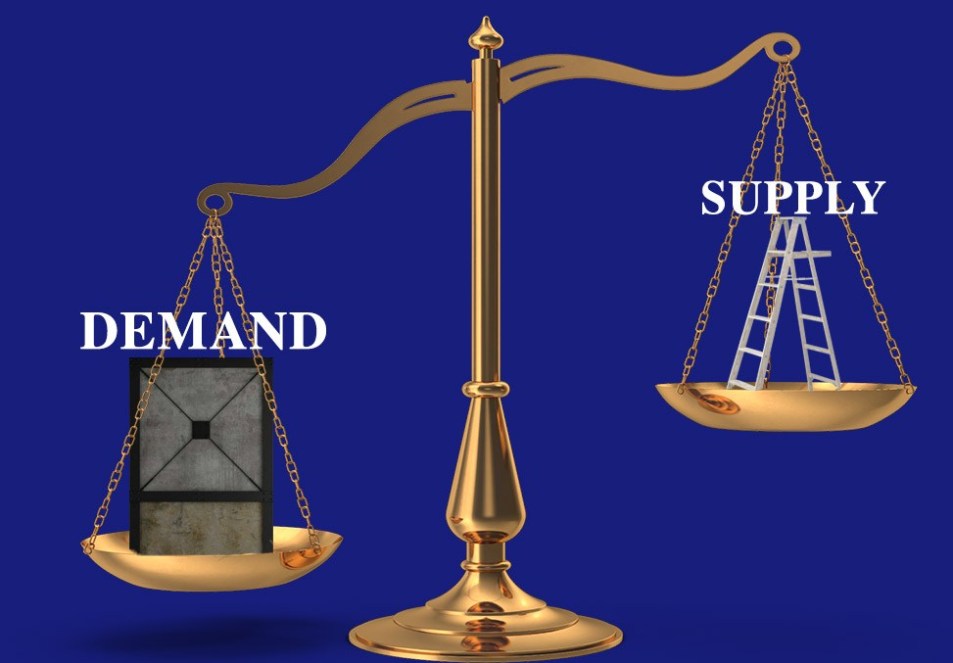
Traditionally in ‘economics’, the homo economicus (rational economic man) is assumed to rank their preferences, making choices that will maximise utility. Since consumers cannot meet all demands, it implicates a need to prioritise one’s needs over wants. Quite simply, SURVIVAL > LUXURY. While this certainly holds true, these choices are made according to consumers’ perception of what are ‘needs’. Hence, enter a new sensation (quite literally).
While the internal influences on the homo economicus are still as per traditional economics, sensationalism prompts a rethink. In recent years, sensationalist media coverage has introduced a revolutionary dynamic to consumer behaviour, a trend especially manifested in the recent coronavirus outbreak. Through technology, the world is becoming increasingly interconnected and as such, accessible information is in abundance. Theoretically, this should enable consumers to make informed and rational choices that maximise their utility; yet, this does not account for the accuracy of such information.
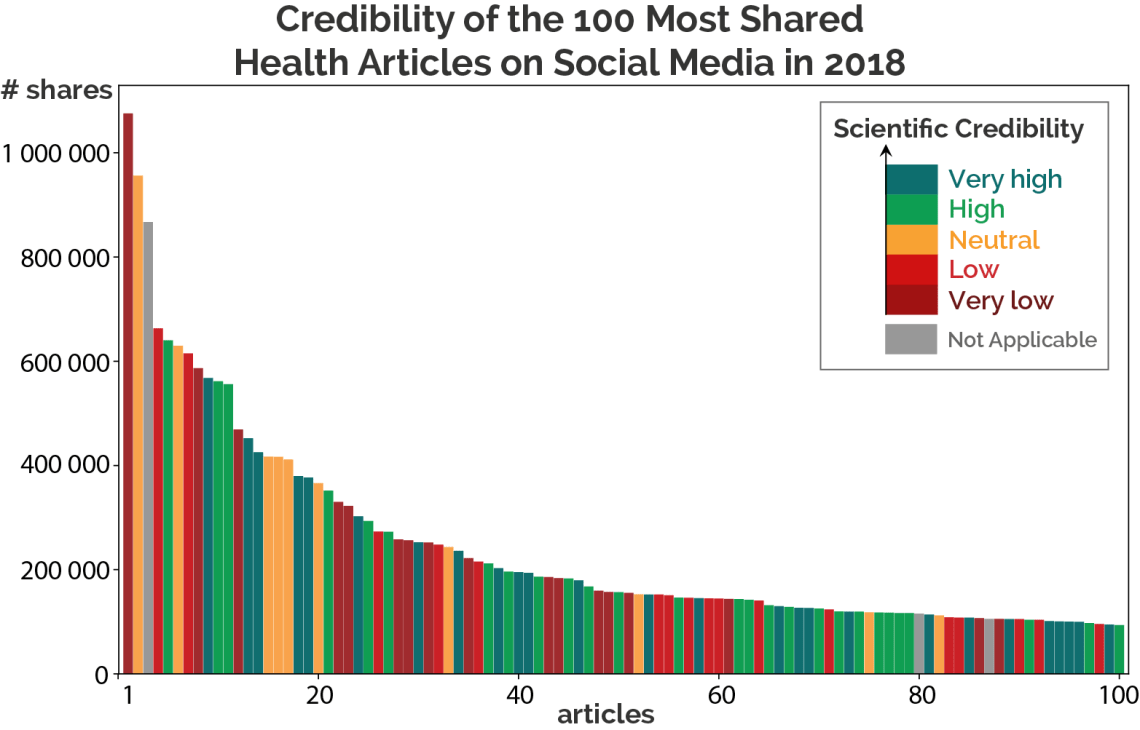
Sensationalism refers to a journalism tactic aimed at misleading people by presenting information in a biased and exaggerated manner, effectively manipulating the truth. In fact, a study by the Health Feedback and the Credibility Coalition in 2018 discovered that less than half of the 100 most shared health articles on social media ‘help readers become better informed’ [Figure 1] and in the midst of the COVID-19 outbreak, its consequences could not be more telling.
‘Today, the only thing reliable about the media – both American and international – is how unreliable they are. Even on vital issues like the coronavirus, they succumb to sensationalism and conspiracy theory.’ – Dr. Alex Berezov, PhD
In such times of crisis, the media still seeks to capitalise on the widespread interest surrounding the issue by instilling fear within the public. Despite the lack of evidence supporting the prevention of COVID-19 with surgical masks, demand for surgical masks is nonetheless increasing exponentially as the public falsely deem them vital for survival. As previously mentioned, consumers rank their preferences, prioritising goods and services essential for survival above all, and the ‘masked truth’ meant that masks have skyrocketed up the homo economicus wish list.
The false conception that masks are ‘needs’ has had severe economic impacts. For instance in Hong Kong, the prices of N95 masks had risen from HK$35 per mask on Jan 26 to HK$50 per mask in the space of 48 hours. This roughly represents an inflation rate of 29% daily, a stark contrast from the Reserve Bank of Australia’s target of 2-3% per annum. To put in perspective, they will reach the same levels of inflation in 3 days as normal inflation rates will in 20 years! This is coming at a time (Jan 28) when there were only 8 reported cases in Hong Kong of the coronavirus…

Overall, sensationalist media coverage has revolutionised the way consumers behave as the distorted truth prevents them from making informed decisions. This has had severe ramifications during recent times as surging demand amid the COVID-19 has created a severe shortage for surgical masks. Ultimately, consumers no longer rank preferences according to what will maximise utility, but rather what’s portrayed to maximise utility.
The truth has been sensationally masked.

 Year 11 MHS Economics 2020
Very comprehensive and very detailed. I appreciate how eloquently written this blog is.
LikeLike
Last sentence has a very nice effect of relating the topic and economic theory.
LikeLike
Good memes.
LikeLike
All jokes aside the way phrased this article was phenomenal. Sensational Masks has a very nice ring to it. Many people nowadays are scared and automatically assume the worst. I have the Cold, and my family assumed it was the COVID-19 due to the overlapping symptoms. Great of you to have pointed this out. Also, I’m a big fan of your music. Great work lad.
LikeLike
Wow! Really well put together. I had no idea that so many articles posted were absolutely fake / not helpful. I like how you’ve gone and connected the inflation target of Australia to the situation in HK.
LikeLike
In a quasi dystopian society, where the democratisation of journalism through the internet has resulted in unprecedented fake news circulating throughout society, it is these posts that make me believe in the power of democratic journalism. Cutting yet academic word choice, as well as references galore, make this post, ironically, very reliable. The only qualms I have with this post is the sharp juxtaposition of the comedic meme and the serious writing style, content and topic, though funny, the meme undercuts your very sincere criticism of modern journalism. If you are looking to expand your repertoire, then consider looking at the actual physical damage of fake news as well as perhaps looking at some criticism of the fundamental economic problem’s axioms.
LikeLike