
The issue of the century?
It was only a few of years ago when the idea that climate change wasn’t a pressing issue and that this idea commonly accepted amongst the Australian population. As shown in the graph below. However, the urgency for climate change is for in Australia is at its highest ever, as is the nation’s average temperature. The WHO (world health organisation) has named climate change as the issue of the century.
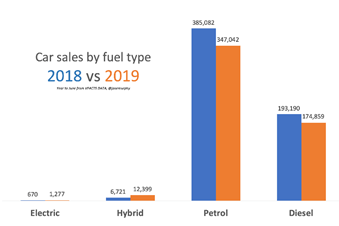

One solution is electric vehicles, even if electric vehicles are powered by coal and not renewable energy, it would still be more environmentally friendly. In Australia both electric and hybrid car sales doubled in 2019; yet in 2019 all electric vehicles made up less than 1 percent of all car sales. Leaving a feeling that Australia is far behind most developing countries like Norway.
Norway has the most Electric vehicles per capita in the world and EV’s made up 55.9 percent of all vehicle’s sale in 2019. The reason Norway has so many electric vehicles is because of government policy. The Norwegian government has provided an extrinsic incentive, by reducing the cost of buying and using electric vehicles. And an Intrinsic inventive as all Electric Vehicles in Norway have an ‘E’ on the number plate. Giving consumers a sense of pride. This is also known as nudging.
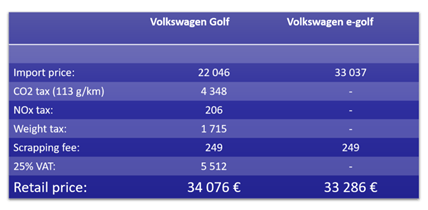

Both Australia and Norway follow a mixed-market capitalistic economy model meaning the consumer is in ‘the driver’s seat’. However, the Norwegian government has made the current trade off of providing incentives to consumer for a future benefit of a reducation in air pollution and noise pollution in cities, reduction in oil import bills and improved balance of trade figures and Less reliance on foreign oil from politically unstable regions of the world.
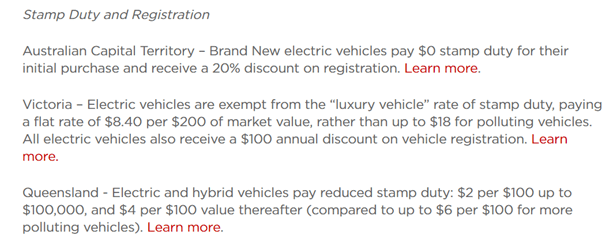
Australia does provide an extrinsic incentive buy reducing costs, but at a much smaller scale to Norway.
In the U.K Boris Johnson announced that Britain will ban new gas, diesel and hybrid cars by 2035, taking a different approach to tackling not only climate change but the issue of scarcity and the economic question of what to produce.
In my opinion:
I personally wish the Australian government, had a similar urgency as the Norwegian government to promote electric vehicles. However, the culture in Australia is different, we aren’t as liberal as Norway, we don’t have the infustructure to support electric cars and Norway has a huge supply of clean energy while Australia doesn’t. It is definitely easier said than done. However, the actions taken by the Norwegian and UK government are admirable. While the procrastination of the Australian government is concerning.
Bibliography:
https://www.bbc.com/news/science-environment-51366123
https://en.wikipedia.org/wiki/Plug-in_electric_vehicles_in_Norway
http://www.environment.gov.au/climate-change/climate-science-data/climate-science/ipcc

 Year 11 MHS Economics 2020