
Vaccinations are a unique medical product, offering protection against infectious diseases such as measles, polio and influenza, all of which left their own unique dark mark on past generations. Proclaimed a “miracle” by organisations such as UNICEF, this modern medical technology saves an estimated 3 million people each year, their routine use leading to the complete eradication and control of several infectious diseases. They continue to provide society with a myriad of social and economic benefits, such as improved health, a key driver in economic growth.
Nevertheless, for something that seems so obviously beneficial, vaccines are more divisive than one might think. This can be seen in the anti-vaccination movement, a movement that has gained increasing support over the last two decades. The organisation firmly advocates the threat of vaccines, claims such as “vaccines cause autism” commonly integrated into their self-devised literature. This is all in spite of years of scientific research and empirical data, which demonstrate that vaccines have no association with these supposed dangers. However, all of this begs the question why should we as a nation care?
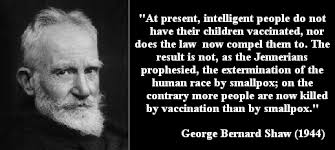
Put simply, whether we vaccinate or not, has a direct impact on the economy.

According to a study conducted by the University of North Carolina’s Eshelman School of Pharmacy, the US economy lost 8.95 billion dollars due to vaccine-preventable diseases, 80% of which stemmed from unvaccinated individuals, accounting for 7.1 billion dollars of the 8.95 billion dollars lost.
Given the impact of vaccines, it is impossible to argue that a rational consumer would choose not to vaccinate. So why is this still the case? The answers can be found in the insights of behavioural economics.
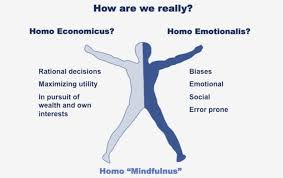
Unlike the traditional economic model of “homo-economicus” or the “rational economic consumer”, behavioural economics does not rely on theoretical assumptions of consumer behaviour. Rather it utilises an understanding of psychology, to illustrate that consumer behaviour is often compromised by many internal and external factors, causing them to make irrational decisions.
One of these factors, prevalent in the anti-vaccination movement, is the notion of bounded rationality. This concept states that a consumer’s ability to make rational decisions is often compromised by the availability of information, the complexity of decisions and the brain’s cognitive limitations and restraints. The bounds of consumer rationality lead to a decision making process called heuristics, whereby consumers use mental shortcuts to make fast decisions, at the cost of decision making errors and biases such as herd behaviour. The growing support for the anti-vaccination movement can be explained by these two concepts, as the claims made by the organisation are based upon misinformation, which has a profound effect on the decision making and beliefs of those that are less informed.
Vaccines are an integral component of both society and the economy. As we move towards an increasingly uncertain future, we must be prepared to find solutions to simple questions such as “how can the rate of vaccination be increased” and “how can we further encourage the use of vaccines to ensure the safety of society?”

 Year 11 MHS Economics 2020
It is quite interesting to see an economic decision so obviously beneficial to the individual consumer and aggregate economy be refuted deliberately. For further insight, you could inspect the impact of personal issues with vaccinations on their stances, and how these situations can affect their perception of vaccinations. Why do humans trust personal interactions and seek evidence for claims that are so obviously refuted by impersonal studies? Guess we aren’t the ‘rational consumers’ that traditional economic models theorised.
LikeLike