Why Bees?
It should come at no surprise that agriculture is incredibly important to both the health of the population and the economy. In 2015, agriculture made up 3% of Australia’s GDP, or around $50 billion Australian dollars, slightly more than tourism. Not only is it important in that regard, but agriculture is also responsible for allowing us to buy and eat many common food. When crops are grown on farms they must be pollinated to create new seeds, normally in the form of fruits/vegetables/nuts. While many crops are wind or self pollinating, many also require pollinators to encourage seed growth. Of all these pollinators bees are the most efficient because of their specialised adaptations. Of these bees, it is the honey bee which is the most productive and efficient.

Where are they going?
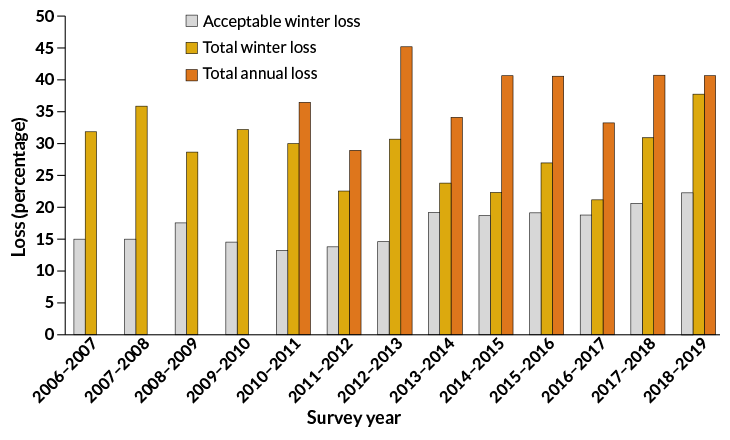
With how important bees are to the agriculture industry, the ever declining bee population poses a problem. Colony Collapse Disorder (CCD) is a phenomenon where all the worker bees will leave a hive, ceasing reproduction, leading to the eventual death of the whole hive. The causes of this phenomenon are not exactly known but could be a result of parasites such as varroa mites, insecticides, climate change, loss of habitat and other reasons. This has caused a rapid decline in the bee population with some areas describing a 90% decrease as of 2019. Between April 2018 and June 2019 the population in the USA of managed bees, bees that are kept in artificial hives for agricultural use, dropped by 40.7%.
Why does this matter?
If the amount of honey bees is declining than so is the food output of the pollinated crops. To match the demand of agricultural goods that require insect pollination like apples and others, the farmers need a respective supply of pollinators. As the supply of pollinators goes below a sustainable level, the supply of agricultural goods will go down. With the supply down, total spending will go down unless prices are raised to match the diminishing supply. With less accessible prices, consumers are less likely to purchase the items in bulk or at all due to the limited income of consumers. With less spending the GDP will fall and the diversity of food options would fall.
“We see striking mismatches in many places between the demand for pollination and the ability of wild pollinators to support that need”
Pollination Ecologist Neal Williams
What should we do?
So is this something to worry about and is there anything we can do? For the average consumer an increase in price for such commonplace food items such as apples and the like could potentially eat up thousands of dollars in the long run. While it is impossible to foresee how much prices will increase if this trend continues, there is one certainty, it’ll only get worse with time. We can either choose to see if the trend rectifies itself and carry on as normal until things potentially become critical or take action to ensure this future never happens. More action should be undertaken to ensure the long term survival of bee populations, not just for our sake but for the bees too.

 Year 11 MHS Economics 2020