The COVID-19, widely dubbed the Coronavirus is spreading across the world. As news of cases appears outside of Asia, the word ‘Pandemic’ has been echoed across the media. Amid the virus, people are rushing to supermarkets worldwide, stockpiling on certain products. However, the question remains, are people simply preparing rationally or just panic buying?
To begin, we need to ask, what is a pandemic? The definition of a pandemic is not one that is based on the severity of the virus, but the geography of it. A pandemic is a disease that spreads globally and infects a large number of people. Therefore, a mild illness that has infected people globally can be classified as a pandemic. Recently, The World Health Organisation (WHO) just classified the virus as a pandemic, which has caused additional panic among society.
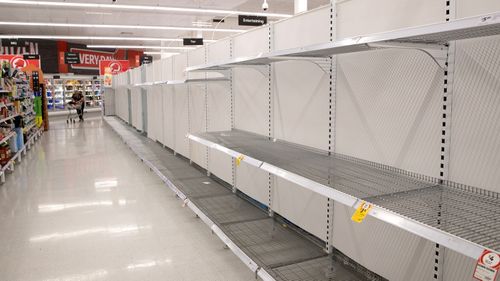
Fears of the coronavirus pandemic have generated urgency among people. In recent days, there have been reports of consumers clearing out supermarket shelves in response to the virus. With supermarkets all over the world experiencing a shortage of stocks, are consumers right to be concerned and rationally responding, or are they just ‘panic buying’?

Figure 1: Empty shelves in Sydney (Credit: Sky News)
Traditional Economics vs Behavioural Economics
This behaviour has widely been described as ‘panic buying’, so to determine if it has been correctly identified we need to look at the idea of panic itself. Panic is one of the most misinterpreted human behaviours. Traditional economics argues that in reality, panic doesn’t exist as shown in the fictional world, that in ‘real’ disasters, people usually hold onto acceptable behaviour and maintain morality, ethics, loyalty and law. Traditional economists assume that we, homo economicus (rational economic man) weigh up the costs and benefits of each decision, not acting on emotion or instinct. However, this does not seem to be an accurate depiction of current real-world events.
Furthermore, traditional economists argue that this behaviour isn’t panic buying, but a rational decision and reasonable response. They state people are justifiably planning. However, an important factor if planning ahead is the availability of information. Traditional economics assumes that we have access to perfect information and make informed decisions, however, this is not true, as we do not know everything regarding the coronavirus. Not even a cure has yet been discovered.
Our current behaviour contradicts the assumptions of traditional economics, so instead, behavioural economics should be used to analyse current events.
Behavioural economics states that our reaction to the coronavirus can be identified as panic buying, which stems from our fear of the unknown and imagining the worst of the situation, which warrants an extreme response. With disasters and emergency events, people usually stock up on emergency supplies. So “It is rational to prepare for something bad that looks like it is likely to occur,” says David Savage, associate professor of behavioural and microeconomics. However: “It is not rational to buy 500 cans of baked beans for what would likely be a two-week isolation period.” The idea of our behaviour is reasonable, but our irrational fear has caused us to take unnecessary extreme actions.
Figure 2: A video captures a brawl between 3 women over toilet paper in Sydney (Credit: Sky News)
The Behavioural Economics of Panic Buying
There is a clear difference between disaster panic and general panic. Disaster panic usually occurs when people have a relative knowledge of the event, such as natural disasters. People know what will occur and how to prepare for it, so they can be rational with their purchases. However, with disasters relating to the health industry, our rationality is bounded by time and information constraints. So panic buying is seen as a way to feel in control of the situation.
Another principle that has caused panic buying is loss aversion or FOMO (Fear of missing out). Loss aversion refers to people’s tendency to prefer avoiding losses to acquiring equivalent gain. The loss of $5 has more impact than the gain of $5. Thus, why toilet paper is disappearing off shelves. People later feel if they needed the toilet paper, but didn’t purchase it when they had the chance, the loss would feel worse.
Furthermore, herd mentality contributes to this behaviour. The fact that panic buying is happening frequently and globally prompts people to participate. Due to the modern age we live in, where technology has become a necessity, it has exacerbated panic buying, as social media has amplified the sense of scarcity with images and messages of empty shelves, thus increasing the sense of urgency.
The fact that China used to be the epicentre of the virus (Currently the epicentre is Europe) has increased panic buying, as the media has been focused on the disruption of global production and supply.

Figure 3: Herd mentality is one of the causes of panic buying (Credit: Medical Xpress)
Why Toilet Paper?
Now that we understand the behavioural economics behind panic buying. We need to ask, why toilet paper?
Due to the toilet paper’s long shelf life and size, we are drawn to purchasing it in times of need. The bigger the item, the more importance we attribute to those items. When we stand in front of empty shelves, we fear that stock will run out, so we buy far more than needed. It is more obvious when an aisle of toilet paper is empty, due to their size, which results in people feeling a need to buy more of these items.
Another reason why toilet paper is being hoarded is that people resort to extreme measures when emergencies occur. They feel the need to do something proportionate to the level of the emergency. The fact that authorities and health officials are stating all that needs to be done is to keep a level of hygiene and social distancing seems like a weak response to the virus. So instead they spend their money on things that symbolise comfort or protection. Instead of buying food, people are buying toilet paper as it helps them hold on to the first-world comforts of being able to use the toilet.
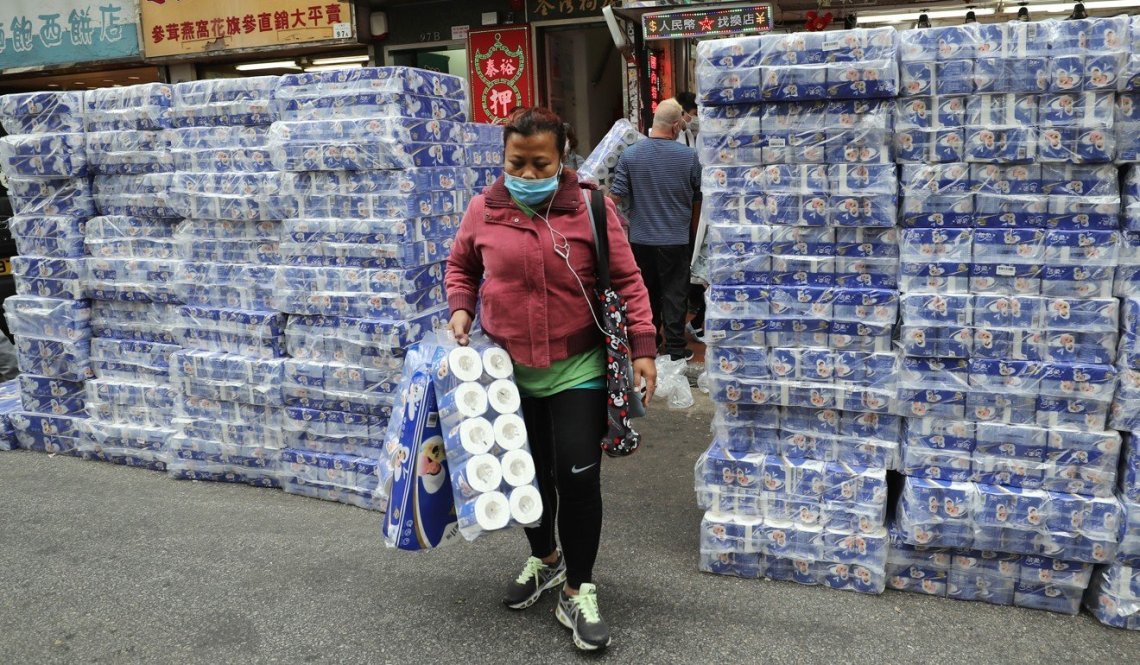
Figure 4: Toilet paper is a scarce commodity, as people clear out stock (Credit: Hong Kong News)
Stakeholders affected
This panic buying has negatively affected those in need of these essentials, as certain people have hoarded and stockpiled more products than needed. However, not only does it impact the social aspect/people, but it also affects the economy. Irrational stockpiling can lead to price gouging. This has been evident as the prices of face masks and toilet paper have increased drastically, as they become a scarcer commodity.
However, companies are maintaining that price gouging does not occur, by removing sales on Amazon and eBay that relate to toilet paper, face masks and sanitisers. Also, companies like Woolworths and Coles have brought in restrictions and limits on how many products you can buy in one transaction. Overall, panic buying has not affected the economy or businesses much, as in the short-term there is a spike in revenue, however, in the long term, they will likely receive a drought in purchases of toilet paper or hand sanitizer, as consumers will have to wait till their supply runs out, before resuming to their normal purchasing habits.
Panic buying has affected the social aspect as people have been fighting and arguing over the purchase of certain items, however with the introduction of restrictions and limits of purchase it has seems it will stop these incidents from occurring in the future.
Overall, panic buying hasn’t affected the economy, only the social aspect, as some consumers are left unable to buy essential needs such as toilet paper. Instead, having to rely on other alternatives such as tissues.
It is the fear of the virus itself that has majorly affected the economy and stock markets.
In Conclusion
It is time that we need to stop panic buying and act rationally. Governments and shops have done their part, however late and introduced restrictions to help prevent panic buying. However, we need to trust and listen to the authorities and eventually this situation will come to pass. We need to do our part and make sure we follow the expert’s advice, stopping panic buying included. Sensible or stupid thinking? I’ll let you decide.
References
https://www.cnbc.com/2020/03/11/heres-why-people-are-panic-buying-and-stockpiling-toilet-paper.html
https://www.nytimes.com/2020/02/28/health/coronavirus-pandemic-epidemic.html
https://www.wired.com/story/whats-a-pandemic/
https://www.bbc.com/worklife/article/20200304-coronavirus-covid-19-update-why-people-are-stockpiling
https://www.researchgate.net/publication/304215489_From_Economic_Behaviour_to_Behavioural_Economics
https://news.sky.com/story/coronavirus-why-are-people-panic-buying-and-why-toilet-paper-11952397

 Year 11 MHS Economics 2020
I liked your use of images and particularly the YouTube video. How long do you think panic buying will last? Do you think it will correlate with the eventual decline of the coronavirus, or will people come to their senses eventually?
LikeLike