With the looming threat of COVID-19 increasing every day around the globe, there has been much speculation on the 2020 Tokyo Olympics, set to begin in late July. What will be the economic implications and how will it affect the stakeholders involved?

In 2016 the International Olympic Committee spent 23.2 million AUD on insurance premium for Games cancellation. It is reasonable to assume that a higher amount was spent for Tokyo 2020, although this number has not been disclosed yet. The Games’ insurance premium for cancellation will certainly not be able to cover the costs in the event of a forced cancellation, and this is not even inclusive of the countless costs incurred by athletes, sponsors, broadcasting channels and countless other Japanese businesses.
In the event of an Olympic Games cancellation the first thought may lie with the athletes but in terms of numerical figures the Olympic sponsors and businesses (local Japanese and overseas companies such as Channel 7, Australia’s official Olympic broadcasting channel) will be affected the most. They stand to lose an astronomical amount, which cannot even be calculated currently. Tokyo would be hit extremely hard, considering they have already exceeded their budget of 20 billion AUD by 110%, spending 42 billion AUD on preparations for the Games.

However, one cannot overlook the athletes. In terms of wellbeing and livelihood athletes have a lot at stake, considering that “for athletes, their career length isn’t long and in many sports success in the Olympics is your one shot at a financial return”. Victor Matheson told this to the Associated Press in an interview where the AP sought an expert opinion from the sports economist hailing from The College of the Holy Cross, Worcester, Massachusetts. He also stated that athletes are the most vulnerable as many of the sports have a much smaller following outside of the Olympics. He also acknowledges that “losses by hotels and other service businesses are unlikely to be insured and some combination of the IOC, the broadcasters and the insurers will lose big”. It seems as though all parties involved will encounter loss, the question is how much?

If COVID-19 continues to spread, the IOC may be forced to follow ‘the herd’ and cancel the Games. Many other sporting events, such as NCAA championships and many professional sports leagues around the world have been cancelled for 2020 already, which may influence the IOC’s decision. The World Health Organisation has now officially declared the virus as a pandemic which will have an effect on the decision.
I remain firm in my belief that if the spread of COVID-19 does not reduce within the immediate months the IOC will be obligated to cancel the Olympic Games, especially considering the number of athletes from almost 200 countries. Yvonne Maldonado, a professor from the Departments of Paediatrics and Health Research and Policy and chief of the Division of Infectious Diseases at Stanford University School of Medicine has commented that, “If you bring a lot of people together, and then you ship them back all over the world: That’s the perfect way to transmit.”
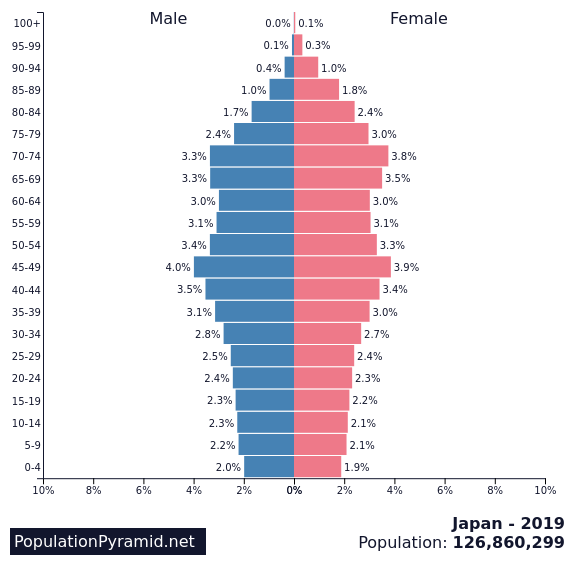
The aging population of Japan will also be a factor, as Japan is a country in Stage 5 of the Demographic Transition Model, meaning it has a negative population growth rate (higher death rate than birth rate) due to a population of majority elderly citizens and middle aged working citizens who are not child bearing. The IOC must take into account the risks and potential effect on Japan and the rest of the world in their future decision on the continuation of the Olympic Games.

 Year 11 MHS Economics 2020
Great Blog, really liked you how you mentioned it would affect Japan as well as the world and how other companies would face losses if the games got cancelled.
LikeLike