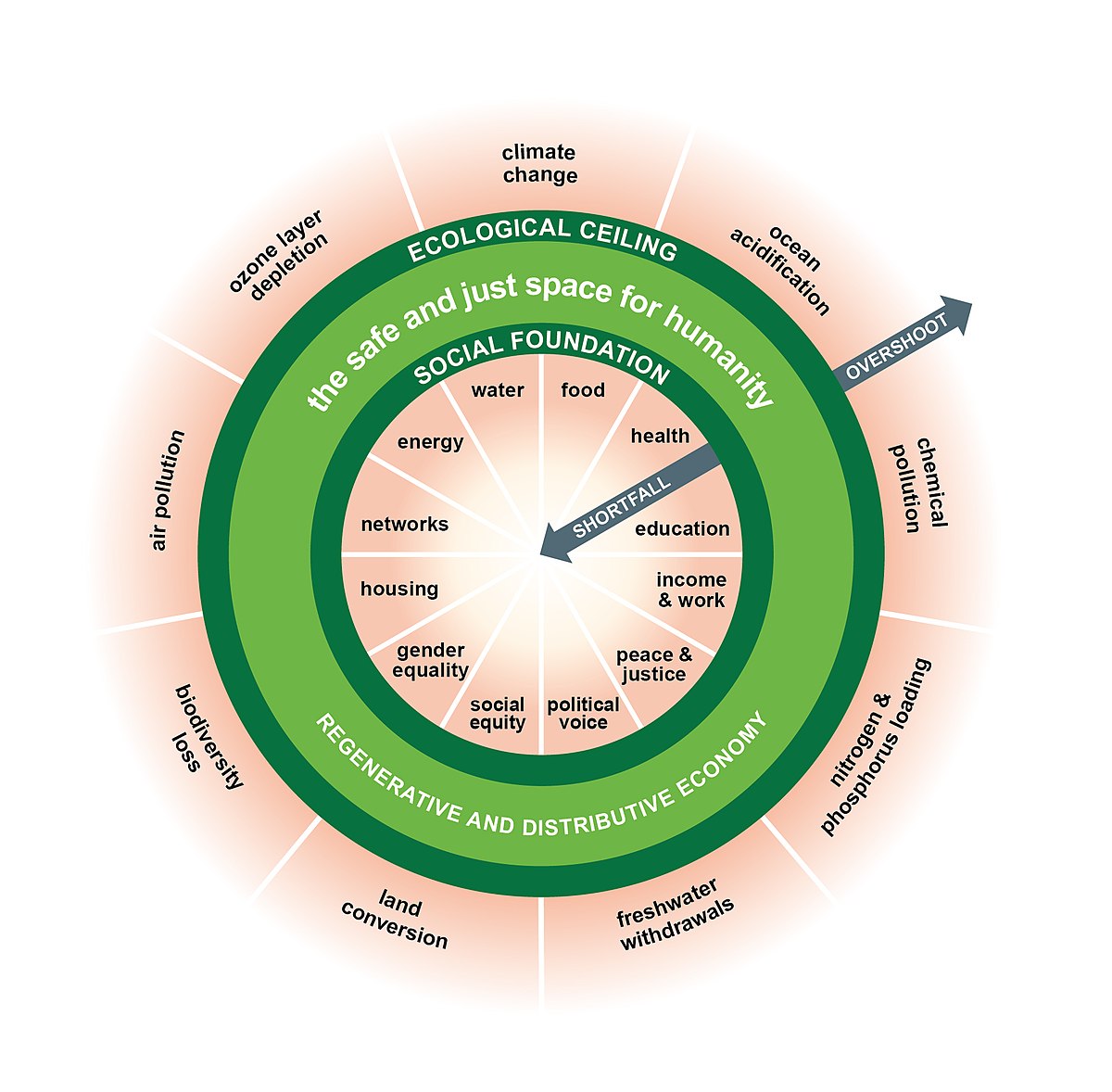
The doughnut model is a radical economic theory devised by Kate Raworth which challenges the mainstream methods of developing a nation. The idealistic model suggests that to improve wellbeing we need regenerative and distributive economies and that growth in GDP is not always required. The goal of the doughnut model is to create state where humanity is not hitting any of planet’s environmental boundaries such as climate or ocean acidification levels and ensuring we all have access to the “life’s essentials” such as food, water, social equity, political voice, justice and more.
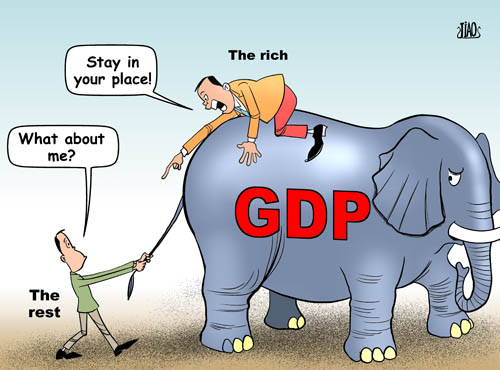
The doughnut model stresses that GDP growth is inessential for better wellbeing, this is because GDP is a poor measure of it. Why is this the case? It’s because GDP measures the market value of total goods and services in a country in a specific time period meaning it calculates economic growth for the whole population meaning it doesn’t account for income inequality. To elaborate, if more goods and services are being sold in a country it doesn’t mean that every citizen has more money on average because there is unequal income distribution, to illustrate, in 2018 the top 1% of Australia owned more wealth than the bottom 70% combined. Therefore, this unequal distribution means the only the richest will benefit most from GDP growth while majority of the population will see little improvement, hence why GDP growth doesn’t equate to better wellbeing.
To resolve this inequality which results in shortfalls of necessities to life, Raworth suggests a more distributive economy. This economy goes beyond redistributing income to redistributing wealth which includes land, money creation, income, business and technology to everyone. Ultimately, this leads to more power being embedded within people ensuring that they aren’t falling short of the necessities.
Further on, the doughnut model suggests that we adopt regenerative economies to ensure we don’t drain the planet of its resources and allow for humanity to last longer on earth. Currently, economies around the world are ignorant of the fundamental economic problem, that there are limited resources available, hence these economies continue to strain the world’s resources with unending collection and creation to satisfy the unlimited wants without regenerating or reusing materials. The regenerative design proposes that we invest into maximising the restoration and recycling of resources and find “ways to turn the waste from one urban process into food for the next”.
We need to learn about these new economic concepts that people like Kate Raworth come up with because they are potential methods for cleaning up the mistakes that current economies are making. By researching these new ideas, it helps us stay awake and aware of the real situation the world is in and not be fooled by politicians who promise exponential GDP growth and environmental sustainability at the same time. In addition, it also contributes to the understanding that the economic systems at play now are seriously flawed and we need be proactive about our futures.
What are some critics of the doughnut model?
Raworth’s proposal has been labelled as quixotic and unrealistic by many. A key factor in the doughnut model is that the economy needs to be perfectly distributive where wealth is spread to everyone in an equal and just manner, however, it is close to impossible to embed this process into an economy, the reason for this is human nature. Greed and the innate desire to climb above others render those in power, the people who can change the system, to sit idly by and watch their assets soar forever while the rest of humanity suffers. For the doughnut model to work, humanity needs to work like a tribe where everyone is looking after one another and no one is greedy.
Have any countries started to implement to model? If so how?
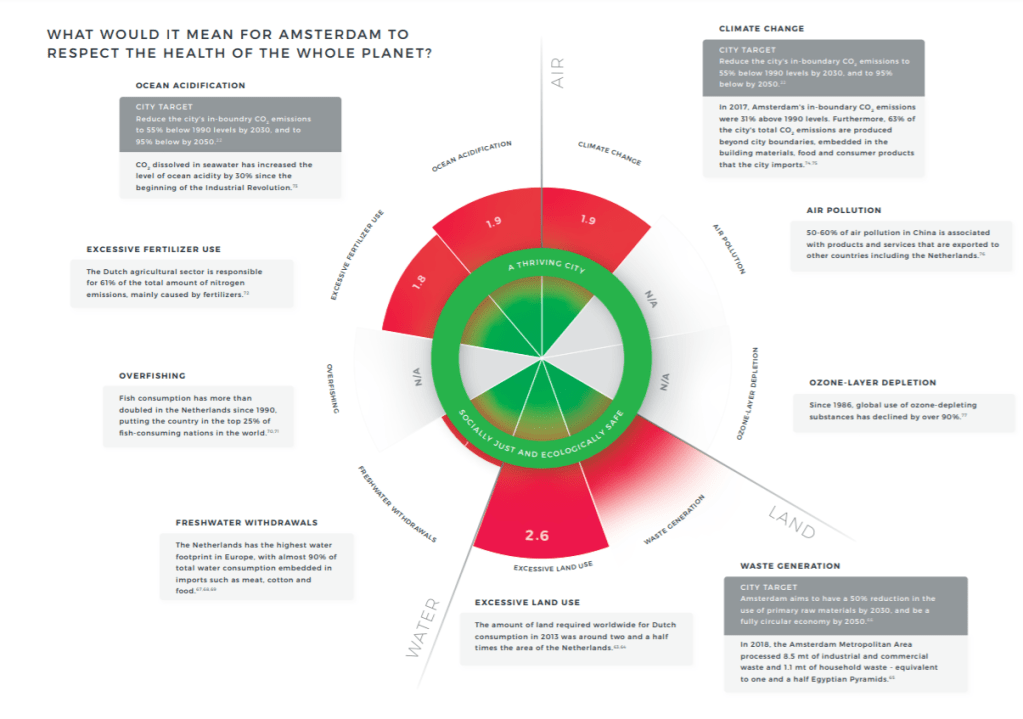
No countries have used the model yet, however the city of Amsterdam is working with the Dutch government, the European union and Kate Raworth to plan a doughnut economy as a recovery from the coronavirus pandemic. The city has identified where they have shortfalls on human needs and are hitting environmental boundaries and have created an action plan to implement the model. Amsterdam has outlined three stages they need to address, food and organic waste streams, consumer goods (consumption levels, recycling of goods) and built environment which is ensuring there is a joint effort to create the doughnut economy. Their goal is to halve the use of new raw materials by 2030 and to achieve a fully circular city (doughnut economy) by 2050.
Ultimately, the doughnut model is one type of idea which addresses the underlying major issues such as climate breakdown and limited energy resources which current politicians keep ignoring. Ideas like these are essentially the pathways for humanity to survive for far longer on earth without ravaging its resources and destroying it. It is also important that we continue to think creatively or “outside the box” to solve our issues like Raworth and go beyond capitalism, socialism, fascism or communism as they are all flawed in some manner and aren’t the only methods to manage an economy.

 Year 11 MHS Economics 2020