What is Environmental Sustainability?
There are various definitions of environmental sustainability, however, a recurring theme used throughout each definition is the idea of ‘quality of life’. According to the ‘Economics from the ground up (3rd edition)’
“Environmental sustainability involves the preservation of our natural environment into the future by ensuring that current practices do not contribute to environmental harm and erosion of our natural resources”
It relates to the concept of sustainable development, which the ‘Economics from the ground up (3rd edition)’ state that
“Sustainable development is development that meets the need of the present without compromising the ability of future generations to meet their own needs.”
In simple, environmental sustainability is about how our actions will ensure that future generations have the natural resources to experience the same or higher quality of life as the present generations.
Issues of Environmental Sustainability
Herman Daly, an American economist, recipient of the Sophie Prize, Right Livelihood Award and Blue Planet Prize is renowned for his work on ecological economics. Particularly, the indicators for a sustainable society, which are known as ‘Herman Daly’s Three Rules’. These rules are:
- Sustainable use of renewable resources means that the pace should not be faster than the rate at which they regenerate
- Sustainable use of non-renewable resources means that the pace should not be faster than the rate at which their renewable substitutes can be put in place
- Sustainable rate of emission for pollution and wastes means that it should not be faster than the pace at which natural systems can absorb them, recycle them, or render them harmless
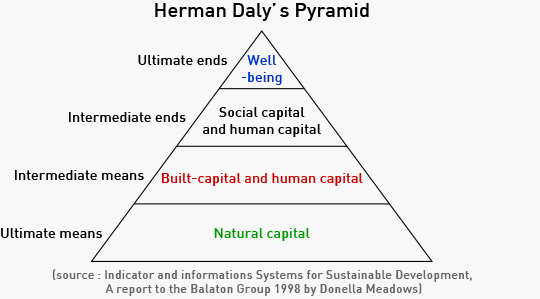
From Herman Daly’s rules, it is evident that the issues surrounding environmental sustainability can be categorised into three main issues. Renewable resources, unrenewable resources, and the health of ecosystems. Further, there is also the overarching issue of long-term goals.
These issues can be investigated further. Such as:
- The use and shift to renewable resources
- The depletion of non-renewable resources
- Protection of ecosystems
- Excess of pollution and waste
- Long-term productivity of resources
- Inter-generational decision-making
- Targeting well-being and environmental sustainability over economic growth
Environmental regulations
Given society’s shift towards more focus on environmental sustainability, countries have implemented environmental policies and regulations. In Australia, the Environment Protection and Biodiversity Act is the national environmental law which protects what they deem as the eight matters of national environmental significance. These include:
- World Heritage properties
- National heritage places
- Wetlands of international importance
- Migratory species protected under international agreements
- Listed threatened species and ecological communities
- Commonwealth marine area
- Great Barrier Reef Marine Park
- Nuclear actions
Why is it important?
In the early 2000s, during the World Summit on Sustainable Development, the concept of the three pillars of sustainability were introduced. It is now an internationally recognised concept for sustainability. It consists of three pillars, social, economic, and environmental.
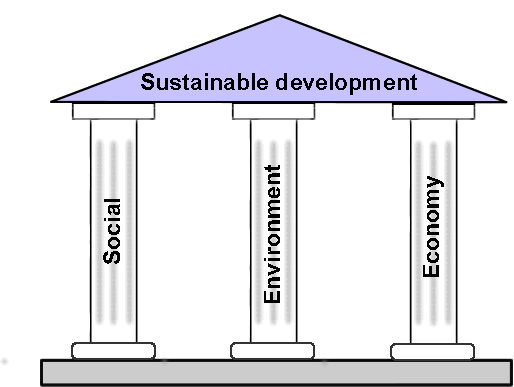
As shown via the image above, if one of the pillars weakens, then the system collapses. Therefore, each pillar of sustainable development should be considered and theoretically of equal importance. However, this is not the case. A majority of international organisations focus on one pillar rather than all three as a whole. Such as The United Nations Environment Programme (UNEP), who focuses on environmental policies and practices. The Organisation for Economic Cooperation and Development (OCED) focuses on economic progress. The United Nations does its best to focus on all three pillars, however, since it has 193 UN Member States, all which have equal representation, much of their focus is on economic progress in developing countries. As a result of no international organisation focusing on all three pillars, we have seen instances where a pillar has harshly declined.
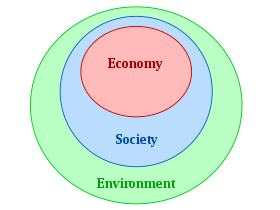
If we look at the three pillars of sustainability in another perspective. The largest and most important concept is environmental sustainability. It should be the primary focus, however, in past years this does not seem to be the case. Although in recent years there has been a shift of focus towards environmental sustainability, as society has finally understood that the lower the carrying capacity of the environment, the lower the standard of living for society and lower economic output as a result.
How is it relevant to the real world and the future?
Due to a shift in focus in recent years, organisations, and businesses are under pressure from society to not only state their sustainable plan and practices but also show their commitment towards them. As a result, environmental sustainability is now the most important concept for corporations. Companies are now conscious and aware of their effect on the environment, as it has financial benefits. Further, businesses have an image to protect and uphold as their sales and performance rely on their brand image. Although, it may not be directly in their best interests, ultimately businesses must be environmentally sustainable to generate sales.
However, you might be thinking, how is this relevant to me. I do not need to be environmentally sustainable. When in fact, our generation needs to be environmentally conscious. It may not directly affect our lives, but what about your children, or even your grandchildren. Environmental sustainability is necessary for our survival. If we do not protect the health of our environment, the consequences will be severe. As a result of not being environmentally sustainable, we have seen rising sea levels and a deterioration in ecosystems. Further, a decline in our agriculture production and available water. All resulting in risks to our health.
How do we reach a sustainable future?
The challenge is to build a society which is environmentally sustainable and promotes stability within a limited time. Although, the goal is clear, getting there is a difficult task. To achieve this, the best course of action would be to turn our cities into green cities. As those who live in cities are generally more comfortable and therefore consume as they please. Therefore, changing the way we live and use cities is essential to achieving our goal. A major step in achieving a sustainable future is by growth management. Humans are known for destroying the natural environment to make way for urban development. Therefore, by leaving the natural environment to their own is a crucial step for a sustainable future. After the balance between nature and urbanisation has occurred, we can start making decisions on infrastructure and development. We can change the way buildings are made in two ways. Designs which increase density and involve green energy. We need more buildings that can generate their electricity and limit expenses. To reach a sustainable future, we need to be accountable for our actions, the benefit of an urbanised society is the use of technology. We can use technology to our advantage which lets us know how much energy we are using, so we can reduce the unnecessary uses of electricity. After the world and environment, we live in is taken care of, then we can start looking at the pressing issues. Poverty, hunger and water. Once we change the way we live, then we can help those in developing nations with real challenges.
What are the limitations involved with environmental sustainability?
With the world we live in today, to apply an environmentally sustainable plan, there will be limitations preventing a sustainable future from occurring. As we live in a free-market capitalist system, we as a society value economic growth, especially our governments as well. Therefore, to truly obtain an environmentally sustainable future, the government must introduce policies and regulations to allow this to occur, however, will they be willing to introduce these regulations that could slow our economic growth. Further, with the concept of environmental sustainability, it cannot coexist with economic growth. It is impossible to have both economic growths while being environmentally sustainable. Therefore, we are faced with a decision, although seemingly difficult, is not, as we constantly value economic growth over the health of our environment.
The harsh reality is that there is no awareness of environmental sustainability. Although we have become increasingly aware, the question remains if we are too late. Especially in developing countries, the importance of environmental sustainability is overlooked. It is our addiction to economic growth that prevents us from achieving environmental sustainability.
Key Takeaways
- Environmental sustainability is how our actions affect the quality of life of future generations
- The issues of environmental sustainability can be separated into three categories: Renewable, non-renewable and the health of the environment
- The importance of environmental sustainability can be shown via the three pillars of sustainable development
- If we look at how the pillars are connected, environmental sustainability is the most important
- In terms of organisations, environmental sustainability is needed to generate sales
- In terms of consumers and individuals, environmental sustainability will affect future generations, especially children and grandchildren
- The path to reach a sustainable future is a difficult one, however possible if we turn cities into green cities
- However, there are limitations to environmental sustainability due to the free-market capitalist society we live in today

 Year 11 MHS Economics 2020