In this article, I attempt to explain what GDP is, as well as discussing its flaws and offering some possible alternatives. When I wrote the article, I tried to find a country that would perfectly show how inaccurate GDP could be when it came to measuring living standards. I think I was successful in doing this.
The gross domestic product, or GDP, is one of the oldest and most commonly used measurements of a country’s wealth, living standards and prosperity. It measures the economic output of a nation in a given year by taking the monetary worth of a nation’s goods and services. The GDP can then be adjusted for inflation to give the real GDP, or divided by the number of people in the country to give GDP per capita (or real GDP per capita).
GDP can also be used as a measure of the aggregate demand of a country. Aggregate demand is the total demand for goods and services produced by that nation over a period of time. In the case of GDP, this period of time is a year.
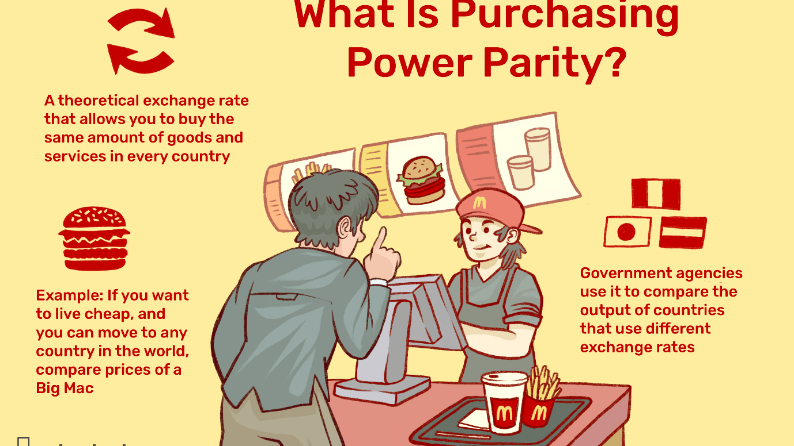
There are two main types of GDP, nominal and purchasing power parity (or PPP). Nominal GDP, the original concept of GDP, measures every country’s output in United States Dollars (USD), in order to allow comparisons between countries that would normally use different currencies. Purchasing power parity on the other hand, attempts to adjust the GDP for the relative prices of goods and services in other countries. For example, buying an apple in Egypt would likely be significantly cheaper than buying the same apple in Australia. As such, when adjusted for PPP, Egypt’s real GDP (PPP) would likely increase whereas Australia’s would decrease. The downside of PPP is that it is much more difficult to calculate than nominal GDP.
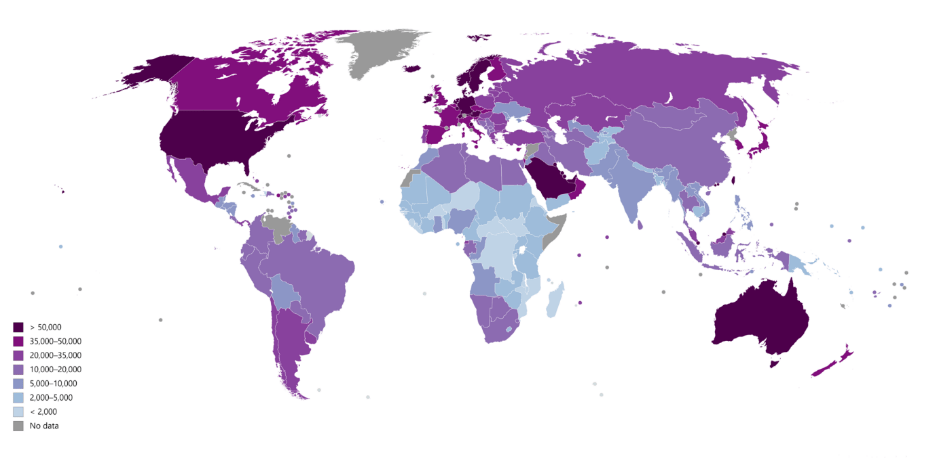
Understanding GDP can be a helpful tool when used to compare the wealth of countries, as well as their growth over time. GDP can be used regardless of the background knowledge of the country, as a preliminary measure to understand the relative level of material living standards.
What are some of the issues with measuring a country using GDP?
GDP omits many indicators and gives only a very narrow economic view of a country, which is possibly its biggest flaw. For example, Equatorial Guinea, a Central African country with a large economic dependence on its reserves of oil and natural gas, had a real GDP per capita (PPP) of $34,900 in 2017 (according to the CIA). This was greater than that of Portugal and Greece at the time, and less than $4000 below New Zealand, Spain and Italy. Looking at this figure alone, one would assume that Equatorial Guinea is a prosperous African nation. However, this is not the case. Half the population of Equatorial Guinea lacks access to drinkable water, and life expectancy and infant mortality are below the sub-Saharan African average. Additionally, Equatorial Guinea has extremely high levels of corruption, considered some of the worst of any country on Earth.
There are other examples as well, particularly in the Arabian Peninsula. In these countries, small percentages of the population often have an exorbitant amount of wealth due to oil deposits, whereas the rest of the population is poor and impoverished. Countries with an abundance of natural resources are especially susceptible to this trap. GDP does not account for this wealth inequality among populations, which can lead to a misrepresentation of the overall standard of living.
There are other problems with GDP as well, such as the lack of consideration for hours worked and pollution, among other factors that have a large impact on the quality of life. The GDP includes the expenditure on rebuilding after natural disasters, for example. A country that has had a severe natural disaster and has spent a significant amount on rebuilding would have a higher GDP than an identical country with no natural disasters at all. Conversely, GDP does not include the black market and other unofficial markets, as well as home production such as cooking and cleaning.
So, what are some possible alternatives to GDP?
One other measure that could be used is the Human Development Index (HDI). HDI includes three different dimensions in order to better represent a country. They use GNI (gross national income) per capita to measure economic activity, which is similar to GDP, while also including the income of residents of a country living internationally. On top of this, it includes life expectancy as a gauge of the health level and expected/mean years of schooling to measure education. The country with the highest HDI ranking is Norway, as opposed to Luxembourg, which has the highest real GDP (PPP) per capita.
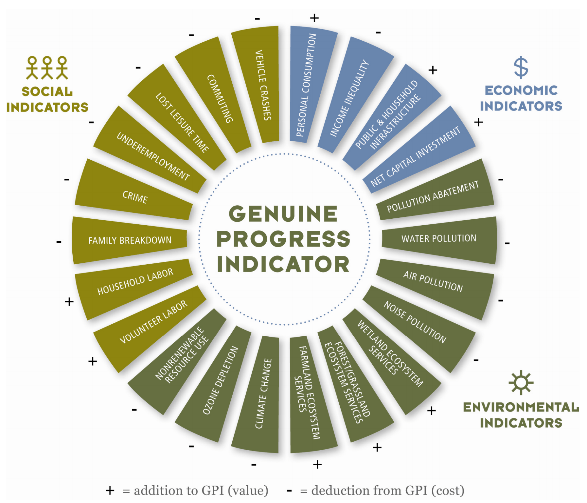
Another alternative is the Genuine Progress Indicator (GPI). The GPI includes real GDP, while also accounting for negative costs such as the cost of pollution and environmental destruction, the cost of crime, and lost leisure time. For example, GPI would subtract the cost of the pollution created by a factory on the environment, as well as any clean-up costs. Real GDP, on the other hand, would add clean-up costs and ignore the environmental impact. This making GPI a good measure of green and social economics. The issue with GPI is that it is more complex to calculate, as it is difficult to quantify the negative effects, such as pollution, for example. As such, GPI is more subjective and vulnerable to bias than GDP and HDI.
GDP has been the standard measure of a nation’s wealth since the mid-20th century. However, while it is a good measure of the aggregate demand and the average economic output, clearly sustainability and human development indexes are equally important in a 21st century society.
Key Points
- Real GDP per capita measures the value of all goods and services produced within a country in a given year. It is adjusted for inflation and divided by every head of population.
- Aggregate demand is the measure of the total demand for a nation’s goods and services in a year. It is measured by the real GDP.
- Purchasing power parity adjusts GDP in each country according to the relative price level of goods and services within the country.
- GDP can misrepresent countries as it does not measure the health, social and environmental conditions of a country, and does not assess wealth inequality. It also ignores black markets and other unofficial markets.
- The Human Development Index (HDI) measures gross national income, life expectancy, and years of schooling.
- The Genuine Progress Indicator (GPI) accounts for negative costs such as pollution, crime and income inequality, and subtracts this from the GDP.
- These alternative measures offer a wider macroeconomic view but are harder to calculate and implement.
References:
Kern, J., 2010. The Difference Between GDP Nominal And GDP PPP. [online] Apple Butter Dreams. Available at: <https://applebutterdreams.wordpress.com/the-difference-between-gdp-nominal-and-gdp-ppp/> [Accessed 18 August 2020].
Wikipedia. n.d. List Of Countries By GDP (PPP) Per Capita. [online] Available at: <https://en.wikipedia.org/wiki/List_of_countries_by_GDP_(PPP)_per_capita> [Accessed 18 August 2020].
Human Rights Watch. 2017. Equatorial Guinea: Why Poverty Plagues A High-Income Nation. [online] Available at: <https://www.hrw.org/news/2017/01/27/equatorial-guinea-why-poverty-plagues-high-income-nation> [Accessed 20 August 2020].
Roser, M., 2019. Human Development Index (HDI). [online] Our World in Data. Available at: <https://ourworldindata.org/human-development-index#:~:text=The%20Human%20Development%20Index%20(HDI)%20provides%20a%20single%20index%20measure,HDI%20utilizes%20four%20key%20metrics%3A&text=life%20expectancy%20at%20birth%20%E2%80%93%20to%20assess%20a%20long%20and%20healthy%20life> [Accessed 24 August 2020].
Hayes, A., 2019. Genuine Progress Indicator (GPI) Definition. [online] Investopedia. Available at: <https://www.investopedia.com/terms/g/gpi.asp#:~:text=A%20genuine%20progress%20indicator%20(GPI,product%20(GDP)%20economic%20indicator.> [Accessed 24 August 2020].
Utah Population & Environment Council. n.d. Genuine Progress Indicator. [online] Available at: <https://utahpopulation.org/our-projects/genuine-progress-indicator> [Accessed 25 August 2020].

 Year 11 MHS Economics 2020