
It is clear that we are currently in a time of unprecedented economic crisis. Covid-19 has affected all elements of the economy to the highest degree. Consumers are spending less due to uncertain economic times and the inability to leave their homes to partake in their usual activities due to varying levels of restrictions. Such a reduction in consumer spending has hit businesses of all shapes and sizes very hard. From Qantas to the local hairdresser, businesses are being forced to cut costs left and right due to a lack of any form of revenue outside of government support packages. These cuts often involve significant job loss, as wages are often these firms’ largest expenditure.

Increased unemployment and underemployment have led to greater reliance on transfer income, which reduced household’s purchasing power, therefore reducing consumption expenditure. As has been much talked about, the economy is likely experiencing a recession, due to the significant weakening of aggregate demand. As illustrated earlier, consumer spending (60% of AD) has fallen significantly due to poor consumer confidence and significantly higher unemployment (7.4%) and underemployment (11.1%). The fall in demand in consumers also reduced investment spending by businesses, whose lack of revenue has made it less likely they would expand or purchase new assets, again reducing aggregate demand. A key indicator of success in any economy is strong and sustainable growth (Real GDP Growth target of 3-3.5%), therefore Australia’s recent struggles are worrying in such a context.
What is Budgetary Policy?
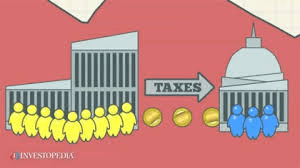
Budgetary policy involves the taxation and spending decisions by Government which impacts on the budget outcome. In challenging economic conditions such as these, governments can take a variety of actions to stimulate economic growth. The role of budgetary policy is to improve the prosperity and welfare of all Australians, through programs that are ultimately designed to improve living standards. In times of negative growth, as we are currently experiencing, budgetary policy takes on an expansionary role to stimulate the economy in a variety of ways. Automatic and discretionary stabilisers act as tools to stimulate the economy but result in greater deficits. Budgetary policy is uniquely positioned in its ability to both improve aggregate demand and supply. Policies such as investment into infrastructure or tax concession can be used to increase productivity, thus reduce costs of production throughout the economy and improving aggregate supply. These policies can also stimulate aggregate demand by encouraging investment spending on resources, thus stimulating economic growth. Budgetary policy has a variety of advantages in its ability to target all of our goals, be tailored to specific sectors and usually have short impact lags.
Instant Asset Write Off
Along with the flagship payments of JobKeeper and JobSeeker, the Australian government is finding ways to stimulate the economy in other fashions. One such example is the adjustment to the instant asset write-off to increase the threshold of assets that can be written off to $150000 for businesses with a turnover less than $500 million. The write off of these assets results in a reduction in the tax liability of the firm, as they would now report lower profits due to the asset being fully depreciated in the current period. The tax concession has benefits that are two-fold.
The write off also encourages business to partake in investment spending and purchase more assets, even if they are quite expensive. As the business is able to write off the asset immediately, they are able to keep the benefits of the utilisation of the asset while being taxed at a lower rate, thereby keeping greater cash flow for the business. The lower tax liability also improves business confidence to spend. This ultimately results in their profits being taxed at a lower rate. The increased investment spending will increase aggregate demand and could stimulate some degree of economic growth in the short term.
The purchase of new assets gives businesses access to more efficient machinery, capital and equipment, thus providing them with better quality assets with which to produce goods. These purchases improve the quality and quantity of productive capital resources, thus boosting productivity and expanding our productive capacity. The improved efficiency will reduce the firms’ cost of production, thereby making them more willing and able to produce. This improved supply would be able to create long-term sustainable growth, as firms would be able to meet the increasing aggregate demand without capacity constraints.
What are the limitations of the Instant Asset Write off?
Due to weak confidence of all participants in the economy, it is likely that the effectiveness of the program, while good in theory, will be limited. Businesses are still largely unable to expand even with the tax concessions, as they have highly limited cash flow, due to a lack of any sales, and would be likely unwilling to increase their debt burden considering the uncertainty in the future. Their lack of confidence in the economy makes it less likely that they would partake in expansionary behaviour when their primary concerns are that of maintaining a degree of liquidity to ensure their survival. Therefore, while the write-off would be highly effective, the practical limitations of the psychological conditions of consumers within the economy could limit its ability to stimulate strong and sustainable economic growth.

Conclusion
Ultimately, budgetary policy are federal government policies that involve taxation and spending decisions. In the trying economic times that we live in budgetary policy is used to stimulate economic growth through increasing aggregate demand. Budgetary policy has the ability to both improve aggregate demand and supply and also has numerous other benefits such as its short impact lags and its ability to target all three goals of an economy.
The instant asset write-off is one such policy. It encourages businesses to purchase new assets by it reducing their liabilities. It encourages greater investment expenditure as businesses are encouraged to purchase more resource. Moreover, it could improve the productive capacity of the economy as businesses have a greater amount and more efficient assets at their disposal, thus could meet greater demand in the economy. However, the program has its limitations, due to the current business and consumer confidence is quite low, therefore they are less likely to spend. Moreover, businesses lack the cash flow to purchase new assets and are unlikely to be willing to take on more debt to take on assets.

 Year 11 MHS Economics 2020