The majority of countries around the world use the same measure of wellbeing: GDP. Gross Domestic Product measures the total value of production which takes place in a country in a period of time. This is done by taking the quantity of all goods and services produced and multiplying them by their prices, then adding them together for a total value. As a measure of progress, GDP is a very good way of comparing how much a country has grown from its previous period, and also comparing one country’s growth to another’s. This is because GDP is such a widespread measure and almost all countries use it as a measure of wellbeing.
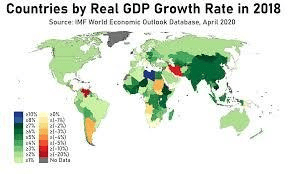
However, GDP should not be used as a measure of wellbeing. While GDP is a decent measure of material living standards, it does not properly portray the non-material living standards in a country. Though an increase in production can mean an increase in overall living standards, this is not always the case.
For example, while there could be an increase in GDP, it only measures the quantity of goods and services, while neglecting the quality of goods and services, or the improvements (or lack thereof) of quality from one quarter to the next. Though GDP increases, if the quality of products goes down, it could actually equate to a decrease in material living standards.
In addition, the chase for a higher GDP could mean the sacrifice of non-material living standards. The increase in production levels could come along with an increase in factory pollution. The negative effects on the climate would most definitely equate to a drop in the non-material living standards, and potentially a decrease in overall living standards.
GDP’s creator, Simon Kuznets, himself said that “the welfare of a nation can scarcely be inferred from a measurement of national income”. GDP was never meant to be used as a measure of a country’s wellbeing, so why is every country using it as the be all end all measure for how great a country is? Every country chases the increase in GDP, as if the decrease in GDP would bring the end of the world.
There are many measures of wellbeing which would be much more suitable than GDP, some examples being; GNH, HPI, and GPI.
GNH is used by Bhutan, measuring their gross national happiness. It is measured using a 148 question quiz, taking into account living standards, health, good governance, ecological diversity, resilience, time use, psychological wellbeing, cultural diversity and community vitality. The quiz is incredibly thorough, and therefore it is a very good indicator of wellbeing. However, it focuses much less on the economics, and since its only been adopted in Bhutan, it cannot yet be used as a measure to compare the wellbeing of nations.
The Happy Planet Index, or the HPI, is a much simpler outlook on wellbeing. It takes into account 3 factors; ecological footprint, inequality, wellbeing and life expectancy. It uses an equation to get each country’s score.

Since the HPI uses an equation, it is easily applicable to many countries. However, since it is so simple and only takes into account 4 factors, it lacks some of the depth that the GNH would achieve with it’s 148 question quiz.
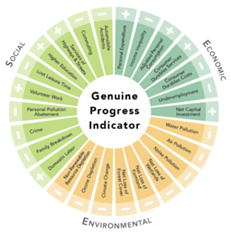
The GPI, or the Genuine Progress Indicator, is a very good measure of wellbeing which could easily replace GDP. It is a measure built off of GDP, but also takes into account how the changes in economic activity would affect the wellbeing of individuals living in that economy. It factors in all that GDP does, however if there is an issue which negatively affects quality of life, the GPI adjusts the figure accordingly. It fixes all that we find wrong with GDP while keeping all that we don’t. However, it still hasn’t been widely adopted in the world, and is only being used in a few US states. If the measure was adopted worldwide, it is definitely a possibility that GPI would replace GDP as the main measure of progress and wellbeing.
It’s important for readers to realise that though countries around the world chase GDP growth, it doesn’t always mean that the increase in GDP is a good thing in terms of the happiness of the country’s citizens. It’s important to consider that the increase in GDP could come at a cost, and that the real wellbeing of a country isn’t displayed in GDP figures.
Sources:
https://www.abc.net.au/news/2014-01-16/dean-dethroning-gdp-as-our-measure-of-progress/5201564

 Year 11 MHS Economics 2020