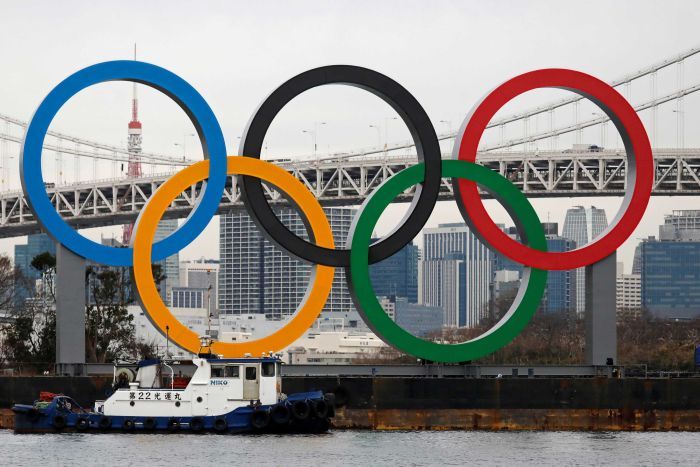
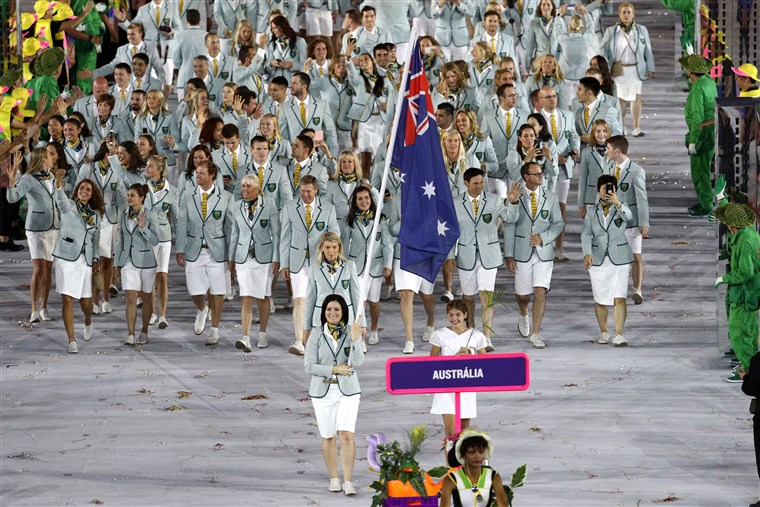
“United by Emotion”. Tokyo 2020 Olympics Game’s official motto. The Olympics is a special event, not only because it occurs every four years. But it is a time where no matter the current state of the world, the conflicts between nations and people reside. It is a time of camaraderie, competition and ceremonies. It is a time where athletes come together, no matter their race nor religion and engage in friendly competition, with the support of their countries behind them. The Olympics embody unity, spirit and dreams. The Olympics inspires.
However, there is a dark side of the Olympics. One which is masked by the awe of this glorious event. The cost of success.
Although, the Australian Institution of Sports (AIS) funds the majority of the money on Olympic sports and National Sporting Organisations, taxpayers fund a considerable amount. In the latest Olympics, Rio 2016, the cost per medal was approximately $12 million. To calculate this cost, it is the Federal contribution to Olympic preparation divided by the number of medals won. Approximately, $380 million AUD was consumed for preparation and 29 medals were won. With $12 million spent per medal, we the taxpayers, need to question if these medals are worth it.
From an economic perspective, we need to analyse the opportunity cost. Should these public funds be spent elsewhere? Currently, Australia received nearly $400 million on sporting infrastructure and organisations. Which is one of the largest injections in funds for years. Which some would argue takes too much of the National budget. With sport being essential in the Australian culture and the prestige of medals, are they clouding our judgement on where these public funds should be spent?
Elite Sports Funding
The opportunity cost of spending public funds on sporting culture is everything else, however, we need to decide where the funding should go. Some observe that sports funding accomplishes no public benefits and that it should be redeployed to other areas, such as health to achieve better use of funding.
To start, we need to question why we fund elite sports? The Australian Sports Commission (ASC), funds over approximately $230 million to elite sports every year. This includes athletics, basketball, cycling, rowing and swimming (which receives the most funds).
The average Australian does not watch high profile elite sports events, so the justification for funding elite sports have been majorly ensuring Australian participation in sports. However, the ASC does not have evidence and statistics to support their reasoning, so I would argue it is majorly for putting Australia on the map via the biggest and international stage. The Olympics.
Excluding Australia’s spending on elite sports, every year Victoria spends $60 million for organising the Formula 1 Grand Prix and Queensland spends $2 billion to host the Commonwealth Games, a minor international sporting event. Additionally, Australia devotes $14 million annually to the Australian Sports Anti-Doping Authority.
Elite sports funding seems to be going to waste, and the government is wasting billions ineffectively attempting to put us on the map via sports. The ASC justifies the funding, claiming it encourages sport participation, and therefore health benefits. However, it is an ineffective use of funding for public benefits, and should rather be used for public services, especially health, such as hospitals, healthcare system and the Pharmaceutical Benefits Scheme.
Why are we still funding elite sports?
Many people have protested the public funding of elite sports and suggest it should be redeployed to the health sector. Yet, the government have done the opposite, and are constantly injecting more funds.
In 2009, businessman David Crawford recommended that elite sport funding should take less priority than grassroots participation. A grassroots movement is one which uses communities as the basis for the movement. Goals of specific movements are different; however, they all intend to increase mass participation. Crawford is recommending that mass participation of everyday Australians in Sport should be the government’s priority rather than elite sports. Crawford justifiably questioned if the funding of elite sports is a public benefit subsidised by Australians. If most people saw Crawford as correct, why were elite sports still getting funded? Patriotism. John Coates exploited Australia’s patriotism, stating that if we didn’t get our act together and increase investment into attempting to win Olympic gold, we would face national embarrassment and “shame”. Both government parties influenced by his statement increased the public funding for elite sports, the lure of the gold medal clouding their view and judgments.
However, Crawford was right. Elite sports are not a public benefit. The stakeholders affected are a select few hundred athletes, their trainers and organisations such as the AIS. Which are all private benefits. Other sporting organisations also receive their part, the AOC, CGA and sports administrators. However, it is not even the athletes or organisations that receive the greatest benefit, but broadcasters, advertisements and sponsors. Who receives an increase in product sales and views through a connection to the Olympics.
In Conclusion
It is time, that Australia recognises that funding elite sport should not be forced upon the public. It should be the private sectors job to do so. Australia needs to realise that athletes are socially useless, they provide no public benefit, however, they are politically useful, as politicians use them for glory as they win medals. As a result, more public funding can be deployed to services in need. I personally believe that public schools should be a receiver of this funding as recent reports have shown that independent schools are receiving more public funds than public schools.
References
https://theconversation.com/dollars-and-sense-funding-and-olympic-success-8661
https://www.abc.net.au/news/2016-08-22/rio-olympics-2016-how-much-does-a-medal-cost-taxpayer/7748946
https://www.crikey.com.au/2016/09/30/keane-sports-funding-should-be-cut-all-of-it-now/
https://www.spectator.co.uk/2014/08/its-time-to-stop-funding-elite-sports/

 Year 11 MHS Economics 2020
Very interesting discussion, however I doubt Australia only won 29 medals.
LikeLike
Great article, I didn’t realise Australia spent so much on the Olympics when we weren’t hosting.
LikeLike
Incredible to see just how much money was being spent. I think that in the future it’ll be interesting to see how the Olympics shape up against other major sporting events.
LikeLike