National Collegiate Athletic Association (NCAA) athletes produce huge amounts of revenue for the organisation. The NCAA brought in $1 billion USD during the 2016-2017 school year, most of that being generated by the Division I Men’s Basketball Tournament otherwise known as March Madness. The NCAA refuses to pay its athletes despite the amount of money it rakes in and justifies their decision through the concept of “amateurism”. “The Principle of Amateurism” in the NCAA Division I handbook states that “student-athlete participation should be motivated primarily by education and by the physical, mental, and social benefits to be derived. NCAA athletes are also prohibited from profiting off their likeness, name or image.
Most of this money generated is paid to the coaches of profitable colleges and to the NCAA itself. This has raised issues as many believe that the NCAA is acting as a business rather than a platform for students to utilise the education that is provided. Also, if the NCAA receives large amounts of revenue through their sports, why aren’t the athletes being paid a single penny? After all, the fans are paying their hard-earned money to watch these athletes play.

An increase in Americans supporting the idea of paying student-athletes for their efforts has been shown. CBS Sports conducted a study where 409 college student-athletes were surveyed. The results found that 54% of athletes claim that they don’t have enough time to study for tests and 80% of athletes have missed a class due to competitions during the academic year. The study also found that athletes spend 50 hours a week on athletic activities for their schools despite the NCAA stating that they limit athletes to 20 hours of athletic activity every week. This is because athletes not only train and compete in their respective sports, but they have time taken away from them because of travelling to and from games, weight-lifting, getting to and from practice, showers and recovery. These athletes are not recognised for the preparation and post-exercise activities that they complete to take care of their bodies. Athletes are also put into the same situation as other college students and are expected to complete the same amount and quality of work even after they are exhausted from practices and trainings.
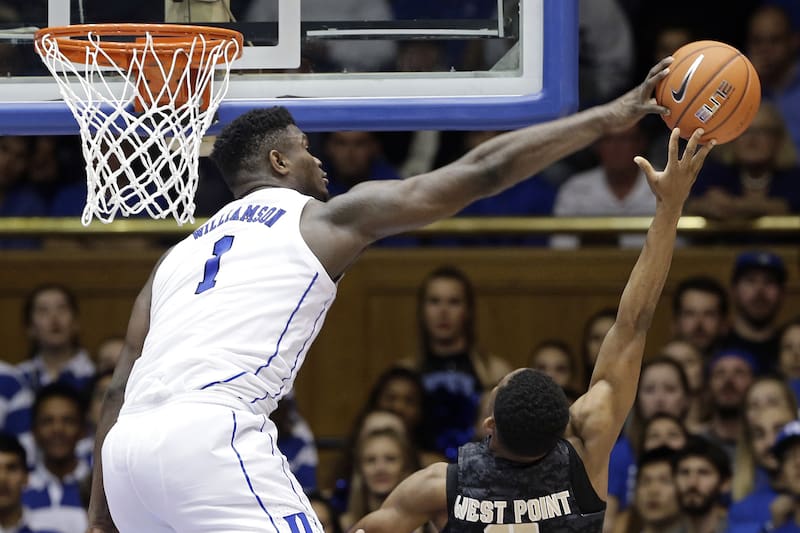
In 2019, we witnessed the phenomenon of Zion Williamson, a monster amongst men who was seen as the top prospect since LeBron James in 2003. He attracted huge crowds of people which led to Duke University games being broadcasted and televised nationally by ESPN. The University of North Carolina and Duke University matchup became the Most-Watched Men’s College Basketball Game in ESPN history despite Zion injuring his knee in the early minutes of the game. In the season that Zion played for Duke, Vivid Seats recorded data showing an all-time high demand for tickets to Duke games.

I believe that as long as any person is above the age of 18, they should be rewarded for their labour. Fans are making the decision to spend the money that they have earned from their own labour to watch these athletes play. The first basic economic question, “What is produced and how much of it is produced” is decided by the concept of consumer sovereignty. Consumer sovereignty is the idea that consumers hold the power to influence decisions therefore influencing the decisions of manufacturer’s as to what and how much they should produce. The fans are paying for an entertainment service which is providing huge amounts of revenue for the NCAA as people are deciding to entertain themselves by watching these exciting sports. However, the people have come to watch the athletes, not the NCAA, so why does the NCAA receive all the profits instead of distributing it to the athletes. After all, without athletes, the NCAA wouldn’t even exist. This relates to the third economic question: How is income distributed? My answer is: unequally.
To conclude: NCAA student-athletes certainly deserve to be paid, even if their wage is minimal. The efforts of these athletes goes unnoticed and they often struggle to balance out their lives socially, academically and with sports. Student-athletes are treated unfairly and are disadvantaged compared to other students due to the amount of time they must devote to their respective sports.
- Cameron, S. (2020). The NCAA brings in $1 billion a year — here’s why it refuses to pay its college athletes. [online] Business Insider Australia. Available at: https://www.businessinsider.com.au/ncaa-college-athletes-march-madness-basketball-football-sports-not-paid-2019-3?r=US&IR=T [Accessed 18 Feb. 2020].
- Huffpost.com. (2020). HuffPost is now a part of Verizon Media. [online] Available at: https://www.huffpost.com/entry/opinion-mcdevitt-ncaa-amateurism_n_5a987314e4b0479c0250a58d [Accessed 18 Feb. 2020].
- Ganesh Setty, J. (2020). The NCAA will allow athletes to profit from their name, image and likeness in a major shift for the organization. [online] CNBC. Available at: https://www.cnbc.com/2019/10/29/ncaa-allows-athletes-to-be-compensated-for-names-images.html [Accessed 19 Feb. 2020].
- Forbes.com. (2020). The Zion Effect: Demand For Duke Tickets Reaches An All-Time High Because Of Zion Williamson. [online] Available at: https://www.forbes.com/sites/adamzagoria/2019/02/07/the-zion-effect-demand-for-duke-tickets-reaches-an-all-time-high-because-of-williamson/#70a6a3df3285 [Accessed 20 Feb. 2020].
- NBC Sports Washington. (2020). Zion blows out of shoe, but leaves game with knee injury. [online] Available at: https://www.nbcsports.com/washington/ncaa/zion-williamson-blows-out-his-shoe-leaves-duke-vs-unc-knee-injury [Accessed 20 Feb. 2020].

 Year 11 MHS Economics 2020
From a business standpoint, of course the NCAA would want to make the most profit from their investments (in this case, the athletes). However, even authors are given royalties and credit for their work (although it may be a tiny amount compared to the profits made), so I think that young athletes should be paid and given more credit than they currently are.
LikeLike