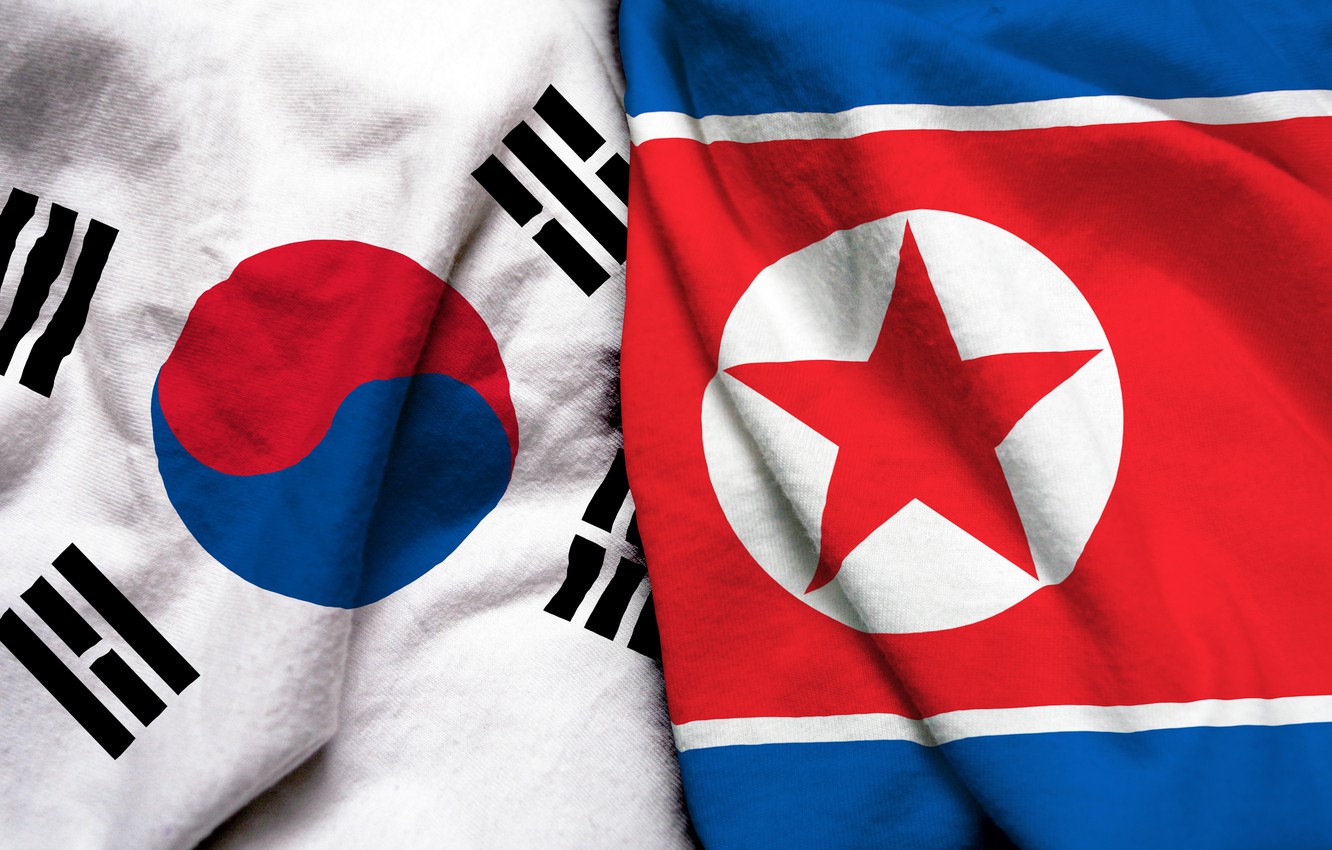
How one nation split into two
North Korea, or more formally known as the Democratic People’s Republic of Korea was formed as the result of the 1950-1953 Korean war in where larger nations utilised it as more of a proxy war for the much more controversial cold war. During this period, the two superpowers at the time; the Soviet Union and the United States of America had assumed control of the two nations in the fight for the superior ideology. After years of fighting however, no lead had been made by either nations and thus, an armistice agreement was drawn upon to cease all hostilities of the Korean War. This major turning point in the two nations ultimately lead to the formation of North and South Korea in where the North would be governed by a communistic political ideology whereas South Korea would be governed by a capitalistic ideology. In the following article, the reasons regarding the large contrast of the two nations economy will therefore by explored.
As of 2015, North Korea’s GDP is estimated at $40 Billion compared to the $1.531 Trillion USD of its southern neighbour. According to many analysts, this difference can be mainly attributed to several economic decisions such as the three basic economic questions and opportunity cost of the production of military goods.

Even though North Korea’s military spending is among the highest in the world, many economists within the nation has concluded that the opportunity cost of producing military goods is far greater than the production of other goods and services. This ideology is then framed to its citizens through propaganda messages that conveys the idea that without a strong military, North Korea would not be able to function effectively. This creates a satisficing behaviour for its citizens as they are made to think their labour has been put to good use.
Overall, I believe that the significant difference between the two neighbouring nations economy can be largely attributed to the contrasting economic decisions that are made. Within North Korea, a large majority of its resources are used on the development of its military rather than in promoting economic activity among its citizens and implementing schemes that would minimize the wealth inequality which further hinders the ability for much of its citizens to become involved in economic transactions.
Bibliography
-https://www.reuters.com/article/us-southkorea-military-analysis/buying-a-big-stick-south-koreas-military-spending-has-north-korea-worried-idUSKCN1VW03C
-https://www.dfat.gov.au/geo/democratic-peoples-republic-of-korea/Pages/democratic-peoples-republic-of-korea-north-korea-country-brief
-https://en.wikipedia.org/wiki/Economy_of_North_Korea#Economic_sectors
-https://www.forbes.com/sites/niallmccarthy/2019/04/29/the-biggest-military-budgets-as-a-share-of-gdp-in-2018-infographic/
-https://www.investopedia.com/articles/investing/013015/how-north-korea-economy-works.asp

 Year 11 MHS Economics 2020
It’s interesting how the two countries went in two drastically different directions and the economic outcomes of these actions. Will be interesting to see whether North Korea markets undergo liberalisation in the future.
LikeLike
Fascinating blog on a barely covered topic. I wonder if North Korea will change their ways to increase their GDP in the future to be like that of South Korea.
LikeLike
Interest! So that’s what they invested their tax in.
LikeLike
*ing
LikeLike
Interest! comment, I wonder if interest rates exist in North Korea
LikeLike