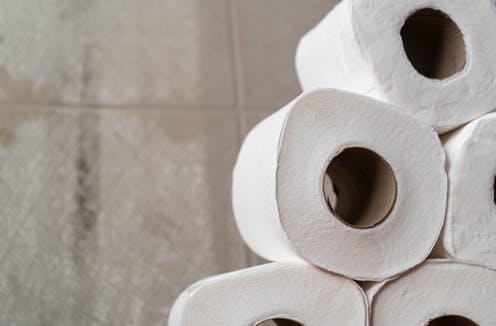
The mass panic buying of toilet paper has given insight to the current low Australian consumer confidence and the dangers of misinformation. With the drastic increase in demand, the Australian economy has taken an unexpected boost in profits with different societies being torn over this new fad. This new (event) has shown us how the emotional impulses of Australian consumers can put such a big impact on the Australian economy.
The obvious impact of the mass spending of toilet paper is that supermarkets and companies that sell/make these toilet paper are earning large amounts of income. This gives a high demand for toilet paper with a steadily increase in supply. The economy is gaining large amounts of money from this income. However, this is only the best case scenario which doesn’t reflect reality. The chain suppliers are not able to keep up with demand and are being bottle necked by closed roads and export chains. This could disrupt consumer relations and end up over weighing the short term profits. The limits on how much consumers can buy only hurts this relation even further. This is also giving rise to safety concerns for workers as the increase in demand cause for more unsafe approaches to fulfilling demand such as driving more quickly to deliver toilet paper and overworking workers to make more toilet paper. This will inevitably lead to worker casualties and will lead to a decrease in workers which will mean less toilet paper being made. Another overlooked impact of the high demand for toilet paper is the resources it takes to make the toilet and environmental impacts that it has. It has already been estimated before this event that the amount of trees cut down needed to make toilet paper would need to be tripled by 2050 and this would only increase that even further. 15% of the world’s trees are cut down for toilet paper and will only increase from this day forward. This shows that not only toilet companies and supermarkets are affected by toilet paper buying but also material exporting companies.
While all these are major concerns for major economic downfall, ABC tissue manager Sunny Ngai says that this mass consumption will barely affect the economy at all. Ngai, having a market share of around 57% led by Quilton and a host of supermarket labels, states that there has been no disruption to the creation of toilet paper and little increase to the cutting down of trees or worker casualties. He states that this will have no long term impact on the economy and that Australia is about 80% self sufficient in producing their own toilet paper. Looking at the stock market shares of Woolworths and Coles, we can see that it has increased:


From looking at the stocks we can see that both supermarket chains have increase in stocks recently. This is a sign that Australia’s economy might actually be benefiting from this increase in demand. Until we have more statistics on the matter only time will tell.
While it is debatable how the economy will be affected by this demand in toilet paper, how did it all start in the first place and how did supermarkets run out of toilet paper so quickly? There are aspects of behavioral economics that can explain this phenomenon. The obvious common decision error most people are making is herd behaviour. People are hearing about other people buying toilet paper(also showing error of vividness) or that supermarkets are “running out of toilet paper” and think: “I need to buy toilet paper as soon as possible or else I am not going to have toilet paper”. This thought of people thinking that they need to buy toilet paper before a shortage happens is the reason why a shortge happens in the first place. They do not think rationally, that they are buying too much toilet paper and follow the herd; without ever stopping to think if buying massive amounts of toilet paper will actually help them in a corona virus outbreak. This shows the bounded rationality of consumers. People are afraid of changing their normal routine (status quo bias) and do not seek to look for alternative methods in this crisis; like buying a bidet. Consumers are acting on emotional impulse and not logical thinking; some people going as far as to fight over some toilet paper rolls. This outbreak completely breaks traditional economics; that consumers are isolated rational consumers. This also shows aspects of human pyschology of people overpreparing for a unceratin crisis and that overbuying items gives them a sense of control. The main culprit for spreading this misinformation of needing to buy toilet paper would be the media. The media has a tendency to spread clickbaiting titles for clicks and the toilet paper crisis is no different. People are easily manipulated into believeing the first thing they see; escpeically if its by the media. It is no surprise that so many people are buying toilet paper when considering media had a role in urging people to buy toilet paper. Of course this all ties in back to the main economic problem of unlimited wants and limited resources. People believe that toilet paper will eventually run out and that they need to buy it before all the toilet paper is out of stock; buying it as soon as possible. As long as a resource will seem more and more scarce, the demand will only increase along with it.
The massive demand for toilet paper is a definitive example of people succumibing to their emotional impulse to stay in the loop and be prepared for a doomsday event that may never come. I belive that while stocking up can be useful for a future where corona virus can destroy the world; people are overeacting. It is known that corona has only killed young infants or elderly and is nothing more than a lingering cold for healthy people. Yet I find it quite odd that people are stocking up on toilet paper rathar than other items like food and water. As for the economic impacts; I’m not too sure how this has affected the australian economy. There are both positive and negative impacts and I would prefer to have more statistics on the matter before I make a conclusive judgement. How will this event affect the economy? Will this actually lead to a shortage of important supplies? Will people actually do their research and not buy impulsively? We can only wait until we see what the future will bring us.
Bibliography
https://www.washingtonpost.com/business/2020/03/13/toilet-paper-shortage/
https://dailygazette.com/article/2020/03/14/toilet-paper-supplies-plunge-as-crisis-deepens
https://news.sky.com/story/coronavirus-why-are-people-panic-buying-and-why-toilet-paper-11952397

 Year 11 MHS Economics 2020
Great article! Do you think the shares of Woolworths and Coles will continue to grow for the next few weeks, or will it reach a point soon where that no longer occurs?
LikeLike
Currently, it is not just toilet paper in low supply, even meats, grains and hand sanitisers are low in supply. When will supply return to normal levels?
LikeLike