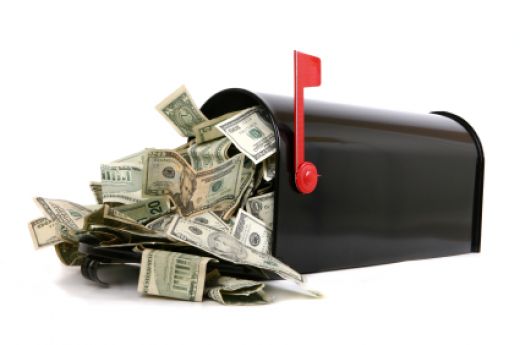
The Coronavirus has been the hot topic for the last few months as its influence spreads from health issues to economic issues, so much so, that economists are speculating another global recession. The Morrison government quickly responded to this with a stimulus package in hopes of protecting the economy and preventing a recession. These packages aim to keep “business in business” and prevent the losses of jobs but are drastically different from the policies which the Rudd government set out during the 2008 financial crisis and will not include a cash splash. They will support and boost the economy back from the devastation of COVID-19 but may not be enough to fend off a recession.
The 2008 financial crisis and the Rudd government

In 2008, the Wall Street crash led to a recession in the US which spread throughout the rest of the world as it caused a great decline in consumer confidence. People were unwilling to spend and thus prices kept dropping and businesses failed, leading to a further decline in confidence. To combat this, Kevin Rudd, the prime minister of the time, released a cash splash which involved handing out $900 cheques to all Australians. This worked surprisingly well as, coupled with the drop-in interest rates, people began spending money again, pumping it back into the economy. From this, it can be easy to assume that another cash splash from the Morrison would easily fix the issue we have now. However, there is a significant part of Australia’s success in 2008 which is not directly involved with our government.
China in the 2008 financial crisis
Amidst the crisis, China was affected relatively less that other countries. However, it did take some action, which was to go on a spending spree on infrastructure. While this happened, the value of the Aussie dollar was also drastically dropping, from 95c to 65c. Due to this, China ended up buying a lot of Australian commodities, acting as another stimulus to our economy. From this point of view, Rudd government at the time did not actually give out money, but instead redirected its profits from China to households and smaller businesses.
What’s the difference between then and now?
The biggest reason for Scomo’s reluctancy in giving a cash splash is the difference between the 2008 financial crisis and the current one from Corona. The Wall Street crash in 2008 came from a lack of consumer confidence creating a demand shock on the economy. The current one comes from companies being unable to export goods and is instead a supply shock. Declining business is leading to a decline in the economy, as opposed to the general public being caught in a debt crisis leading to the economy collapsing. A cash splash in this context will instead cause inflation, as it will increase demand while supply is already low, hurting the economy instead of boosting it. Moreover, the Australian economy was booming before the 2008 recession while the economy at the end of 2019 was already extremely weak. Due to this, the government cannot afford to lower interest rates or the cash rate anymore.

The Morrison government’s response to Coronavirus
In response to the Coronavirus, the Morrison government has released its economic stimulus package on the 12th of March. Its aim is to “protect the economy by maintaining confidence, supporting investment and keeping people in jobs”. The $17.629 billion package is separated into 4 parts: financial support for business investments, cash flow assistance for employers, payments to households in need and additional assistance for areas which are severely affected.
This fiscal package is centred around businesses with $3.9 billion allocated for business investments. Business investment is crucial as businesses growing lead to the economy growing. To incentivise this, they are cutting tax on investments through increasing the tax write-off threshold of investments from $30 000 to $150 000 and giving 50% depreciation deductions off eligible assets for 15 months. These are estimated to help around 3.5 million businesses make investments.
The largest part of the package is in regard to the employment side of the package where $8 billion is allocated to help employer’s cash flows in order to keep their “keeping people employed and supporting jobs”. Companies with turnovers less than $50 million will be eligible to be given a cash payment of up to $25 000 in order to pay their staff. Employers of apprentices will also be eligible for a wage subsidy of 50% of the apprentice’s wage in order to keep them employed as well. Keeping people in jobs will play a large part in preventing a recession as unemployed individuals can’t spend money, which will in turn, give less money to the economy.
The last cash payments are focused on people who need direct support, like low income earners or areas which are heavily reliant on tourism, making sure that they are financially secure. The treasurer, Josh Frydenberg expects that the money spent by the people supported by this payment will “encourage economic activity”, something they will need in the “June quarter, in particular”.

What affects will these policies have?
The cost of the policy has made the government concede its surplus for the financial year, but nevertheless, economists have had a highly positive response. Gareth Aird, the Commonwealth Bank senior economist describes it as an “effective policy and very timely”. Increasing cash flow in businesses in order to keep employment high will ensure that the economy does not collapse in a debt crisis like in 2008. However, there were sceptics in regard to the investment incentives as many capital investments will be imported in a time where Australian business are most in need of money.
Overall, the government has responded well to the Coronavirus economically in a time where Australia was already in a bad spot. While it may not be enough to deter an inevitable recession, it will reduce the impact and make Australia come out of the crisis in the best state possible.
Bibliography:
https://www.afr.com/policy/economy/kevin-rudd-did-not-save-the-economy-in-2008-20181015-h16ne3

 Year 11 MHS Economics 2020
A very nice informative article reflecting the recent Covid-19
LikeLike
Nice vincent, I did think the interest rate was too low.
LikeLike
Love your work, Vincent!
LikeLike