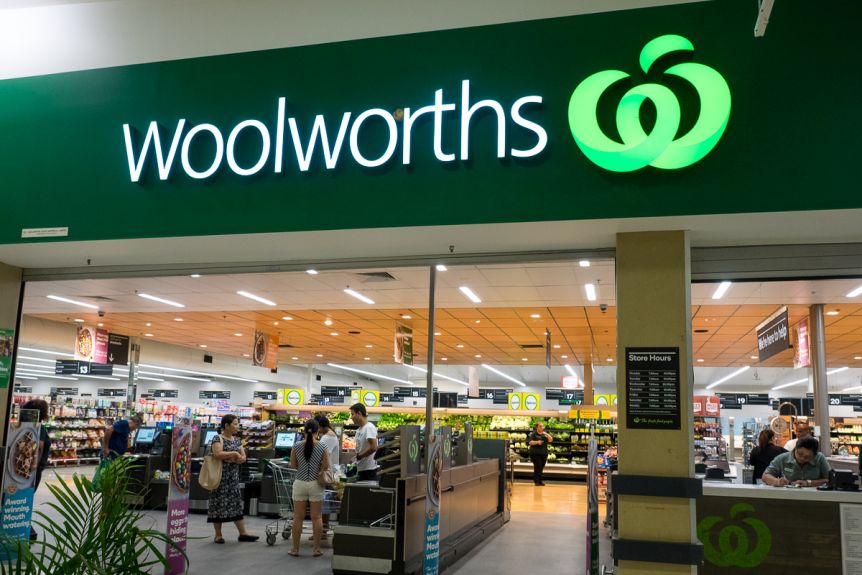
Woolworths is one of the largest Australian chain of supermarkets with about 201,000 employees serving 29 million customers over 3,000 stores on a weekly basis. Founded in 1924, its revenue in 2019 accounts to $39.57 billion. Along with Coles, they account for 80% of the Australian market.
The world has been paying much more attention to the ethical production of goods and services that they consume. Retail company, Woolworths Group, has been pursuing the Triple Bottom Line approach through aiming to focus more on people and planet rather solely on profit
Woolworths Group has been heavily investing in sustainability and they show this in their sustainability reports which could be viewed from their 2018 Sustainability report to the 2019 Sustainability Report outlining their contributions to better sustainability.

Source: https://www.woolworthsgroup.com.au/icms_docs/195583_2019-sustainability-report.pdf

Source: https://www.woolworthsgroup.com.au/icms_docs/195398_2018-sustainability-report.pdf
Woolworths smartly addresses their approach to the Triple Bottom Line as people, planet and prosperity.
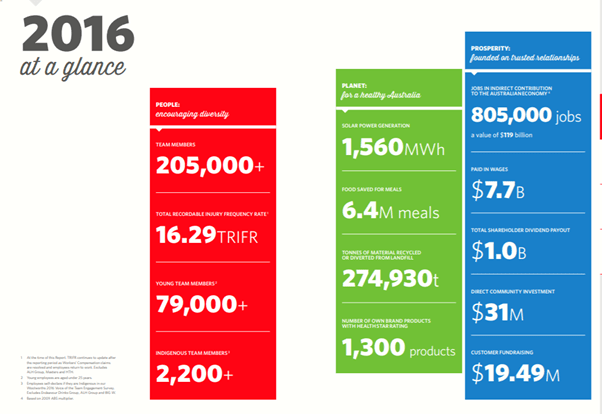
As part of their focus on the planet, Woolworths has put effort in multiple instances such as collecting 22.0 million litres of rainwater in the year of 2016 to replace portable water used in truck washing, tower cooling, gardens and toilets. Woolworths is also determined to source key raw materials and commodities to an independent standard and to reach net zero supply chain deforestation within brand-products such as timber, pulp and the packaging.
The belief of consumer sovereignty said by economists are, a lot of the times, rarely met but Woolworths has put in the effort and has made success in the triumph of consumer sovereignty through their scheme of ‘The Odd Bunch’.
More than 30% of purchase whatever good is cheaper regardless of appearance or ratings, Woolworths took advantage of this by offering misshapen fruit and vegetables through their ‘Odd Bunch’ initiative which sold more than 30 million kilograms which would’ve been food waste.
Regarding the second economic question of how to produce it, Woolworths has been working heavily in 2019 to reduce the use of plastic used to package the produce of multiple products. Last year 2019, Woolworths reduced 313 tonnes of plastic used to package fruit and vegetables followed by 505 tonnes in plastic packaging within their bakery items. Woolworths was also the first company to adopt the ‘Australian recycling label’ through producing 600ml water bottles, pre-packaged meals, yoghurt and bread on their own brand through ethical measures.
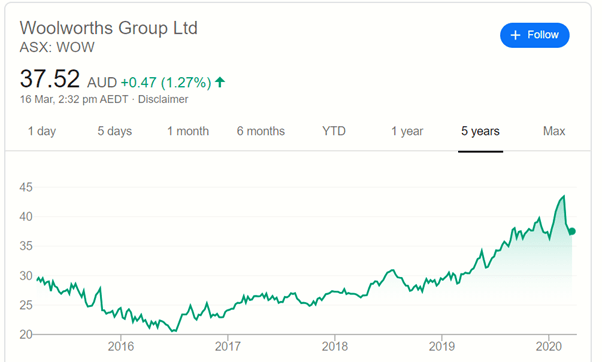
Regarding the impact of the approach towards the Triple Bottom Line, Woolworths Group Stocks seem to have a steady increase since the first 2018 Sustainability Report.
Stakeholders should feel more optimistic about purchasing more shares as Woolworths is showing to be very ethical and sustainable. Just like the famous logo, Woolworth’s effort in being as green as possible has been responded in an increase in sales and stock price.
From my perspective, the Triple Bottom Line is applicable and has worked out well. I hypothesis that Woolworths will continue to thrive but with the current situation of the COVID-19 I’d say there will be a massive increase in sales from panic-buying and then a plunge in sales after all needs are bought. Stock price should also go through a phase of decrease in the current bear market that has emerged.
Sources:
Triple Bottom Line Approach General Knowledge

 Year 11 MHS Economics 2020
Very good insight on how the Triple bottom line affects Woolworths. It is true that at least for the forseeable future that panic-buying will be reoccuring theme, and it’ll make stocks very fluctuating and unpredictable.
Nice one, huang
LikeLiked by 1 person
It will be interesting to see how the triple bottom line approach will fair during times of crisis for companies and Woolworths. What will they prioritise first?
LikeLiked by 1 person
Interesting article inspired by our sustainability class.
LikeLiked by 1 person
Fascinating Blog Joey. Very insightful view of how the triple bottom line works in a real life scenario.
LikeLiked by 1 person
Great insight into how Woolies addresses the basic economic questions. Looking to forward to seeing how supermarket chains deal with the coronavirus outbreak.
LikeLiked by 1 person
Simply Incredible! Love the writing style! Extremely informative stuff on Woolworths, hypothesis is very insightful! Keep up the good work Joey!
LikeLiked by 2 people
Insightful blog! Would be interested if you explored how Woolworths and other supermarkets and how they tackle the issue of Coronavirus, such as introducing hours for only elderly and disabled people etc.
LikeLiked by 1 person