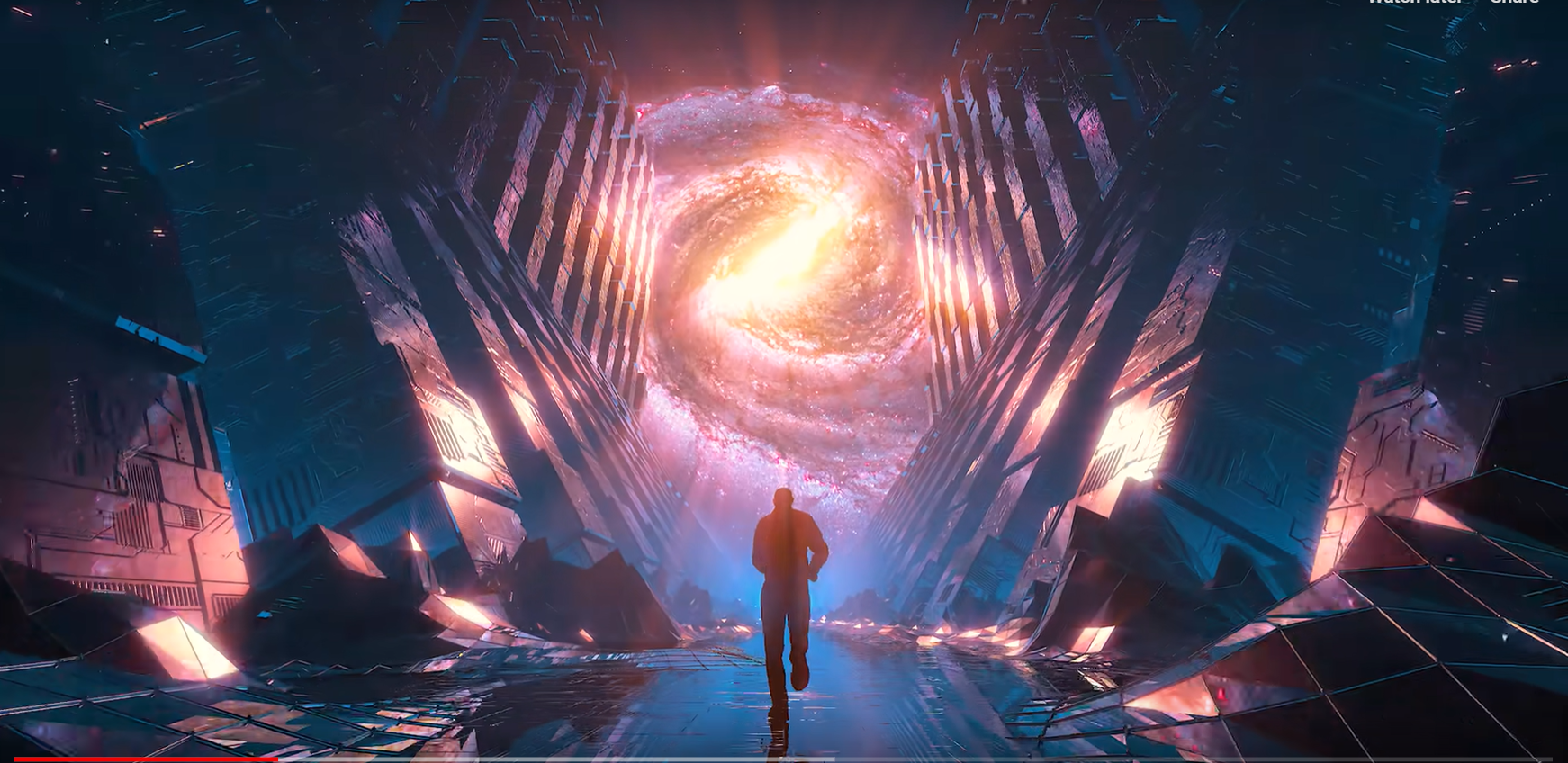

What do you see when you look up in the sky? Do you get lost in a trance in those brilliant, dazzling lights? For me, I see our future; the last hope for our civilisation, where our descendants will travel through the vast expanse of the universe in search of a habitable zone to ensure the continuation of the survival for the human race.
As our planet plunges deeper and deeper into the unknown, alongside the emerging, planetary threat that is global warming, our governments will need to look for resources in other ways to prolong Earth’s habitability. In other words, before we can gain and develop the required technologies for intergalactic travel, we need to search for alternatives to maintain our survival. And in what better way could we do that than in Asteroid Mining!
Asteroid mining
The dictionary definition for asteroid mining is “the exploitation of raw materials from asteroids and other minor planets, including near earth objects.” With an unlimited market potential due to the abundance and unknown resources out there in the vacuum of space. Asteroid mining is ultimately one of the pioneering developments of the future, depending on how fast the market will adapt and shift its focuses to ensure its prosperity in the long term.

To give you a bit of a background, what we are focusing on is a region between Mars and Jupiter where the main asteroid belt (an estimated 628.3 million km away from Earth) in our solar system lies. Within this region, contains four unique types of asteroids that consist of chemical properties which hold useful ingredients to maintain Earth’s survival. This entails:
- Carbon-based asteroids (contain complex organic molecules that may hold clues to life origins)
- Water-based asteroids (needed to sustain life in case of shortage)
- Stony asteroids (Silicon and magnesium)
- Metal asteroids (Gold and platinum as well as iron and nickel – brilliant for construction)
How does this relate to behavioural economics?
Hypothetically speaking, as consumers of our generation succumb to common decision making errors through vividness and herd behaviour in relation to the newest technologies, it is estimated that in 15-20 years time, the supply of these metals will dissipate drastically. This ultimately represents a market graph where demand exceeds supply. Assuming that the technology has advanced far enough to reach the asteroid belt which holds a significant number of logistical challenges (transportation and load), there will be an influx of supply to meet the demand (equilibrium point) of a growing population.
On the other hand, this may stimulate negative externalities in the market which may potentially see a significant shift in consumer interest. What do I mean from this?
- An abundance of a rare commodity (e.g. gold or diamonds) will consequentially denigrate the perception of these resources as they shift to become a norm in the market. In layman’s terms, prices will drastically decrease which will initially result significant amounts of consumer spending for lower-value consumers, but with supply exceeding demand (downfall in its rarity), consumers will search for other opportunities in the market.
- Leading on from the idea, businesses which extract their sales from recognising a market in rare materials (e.g. Rolex and IWC Schaffhausen) will lose a significant portion from their sales as they target high-value consumers through their consumer target audience in this niche market.
- The fight to capitalise on these resources could result in trade wars between various economies leading to an extreme capitalist society. Government and corporate entities (like NASA and Space X) will battle it out causing uncertainty in the consumer market, where sales will depend on whom more effectively empathises with society’s bounded rationality.
Personal Verdict
The exploration of space will go ahead, whether we join in it or not, and it is one of the great adventures of all time, and no nation which expects to be the leader of other nations can expect to stay behind in the race for space.
JOHN F. KENNEDY, speech at Rice University, September 12, 1962
Being born into the pioneering revolution of our time, I feel obligated to spread my opinion about this issue, being it is one of the most discussed topics of our time. The quote above said by John F. Kennedy during the 1960s Space Race between America and Russia, I believe this resonates a similar scenario, in which two major powerhouses of their time are competing to reach the moon first. In our situation being more oriented on the macroeconomic level, developed nations are fast-tracking developments to ensure they are the first to exploit the potential gap (trillion dollar market) that is asteroid mining. Although this will have significant positive externalities in regards to the availability of Earth’s resources for sustenance and space colonisation, I ultimately feel this revolution in resource obtainment will pose many legal and ethical questions for the future. Is it ethical declaring a region outside Earth as our own? Will we be less environmentally conscious when we enter an age where resources are at an abundance? Are we heading to an extreme capitalist era? All in all, we could only hope for the best and prepare for what comes around tomorrow…
Bibliography
- Redd, N. (2017). Asteroid Belt: Facts & Formation . [online] Space.com. Available at: https://www.space.com/16105-asteroid-belt.html [Accessed 16 Mar. 2020].
- SpaceX. (2020). SpaceX. [online] Available at: https://www.spacex.com/ [Accessed 16 Mar. 2020].
- NASA. (2020). National Aeronautics and Space Administration. [online] Available at: https://www.nasa.gov/ [Accessed 16 Mar. 2020].

 Year 11 MHS Economics 2020
When will humans start mining asteroids
LikeLike
Very interesting, as I do not know much about Space exploration and asteroid mining.
LikeLike
i like space
LikeLike